What Is Copper Strip for Transformer Winding?
Definition and basic characteristics of transformer winding strip
Copper strip for transformer winding is a precision-processed electrical copper material used to form transformer coils. Our C11000 / T2 pure copper strip provides 99.9% high conductivity and is available with customized thickness, width, hardness, surface finish, and coil packaging to suit different winding requirements.
Produced in accordance with ASTM B152 and JIS H3100, electrical copper strip is designed for consistent processing performance. Controlled dimensions, surface quality, and slit-edge preparation help support stable coil forming and reliable material handling.
Why copper is the preferred material for transformer windings
Copper is widely used as a transformer winding material because of its high electrical conductivity. It enables efficient current transfer within the coil and supports the performance requirements of electrical transformer applications.
For buyers requiring dependable supply, copper strip also offers practical processing advantages:
- High-conductivity C11000 / T2 pure copper
- Custom thickness, width, hardness, and finish options
- Precision slitting and specialized spooling or packaging
- Material traceability through a Mill Test Certificate (MTC) with every shipment
Key Properties of Copper Strip for Transformer Applications
Electrical Conductivity and Transformer Efficiency
Our C11000 / T2 pure copper strip provides 99.9% high conductivity for transformer winding applications. High copper strip conductivity supports efficient current flow through the transformer coil and helps manufacturers maintain consistent electrical performance.
| Property | Fullgreat Copper Strip |
|---|---|
| Material grade | C11000 / T2 Pure Copper |
| Conductivity | 99.9% high conductivity |
| Applicable standards | ASTM B152, JIS H3100 |
| Supply options | Custom thickness, width, hardness, and finish |
For application-focused purchasing details, see our C1100 copper strip transformer buying guide.
Thermal Conductivity and Coil Heat Control
Copper strip for transformer winding is selected for its ability to conduct electricity and manage heat within wound coils. Consistent strip dimensions, surface condition, and coil formation help support orderly winding and stable transformer assembly.
We provide custom processing options, including slitting, forming, and packaging, to match different transformer winding material requirements.
Mechanical Properties and Formability
Transformer copper strip must be suitable for controlled winding without compromising the required coil shape. We can adjust key material conditions to suit the application, including:
- Hardness for the required winding behavior
- Thickness and width for coil design requirements
- Surface finish for specified processing needs
- Coil and spooling format for handling and winding operations
Material selection support is available based on the intended application and processing requirements.
Dimensional Accuracy for Winding
Accurate dimensions are essential when producing transformer coils. Variations in copper strip thickness or width can affect winding consistency, material use, and assembly control.
Our factory-direct supply supports customized dimensional requirements for electrical copper strip, with processing and testing backed by more than 100 sets of advanced equipment. Every shipment is supplied with a traceable Mill Test Certificate (MTC) for material verification.
Common Copper Grades for Transformer Winding
C1100 (ETP Copper): Properties and Typical Applications
C1100, also known as electrolytic tough pitch copper, is commonly specified for copper strip for transformer winding. Our C11000 / T2 pure copper strip provides 99.9% high conductivity and is manufactured in line with ASTM B152 and JIS H3100 requirements.
It is a practical electrical copper strip choice where stable conductivity, controlled dimensions, and dependable winding performance are required. We supply C1100 copper strip with custom thickness, width, hardness, surface finish, and coil processing options.
C1020 (Oxygen-Free Copper): When Higher Purity Is Required
C1020 oxygen-free copper may be considered when a transformer design calls for a higher-purity copper material. The grade selection should be based on the actual operating requirements, material specification, and applicable project standard.
For standard transformer winding material requirements, we focus on C11000 / T2 pure copper strip and provide material selection support based on the application. Each shipment can be supplied with a traceable Mill Test Certificate (MTC).
How to Select the Right Grade for Your Transformer Design
The right copper grade depends on the electrical, dimensional, and processing requirements of the transformer coil. Key points to define include:
- Required conductivity and applicable material standard
- Strip thickness and width for the winding design
- Hardness and forming needs during coil winding
- Surface and edge requirements for insulation protection
- Coil format, packaging, and traceability documentation
For projects using both winding and core materials, we can also support sourcing of CRGO and CRNGO electrical silicon steel coils and sheets under IEC 60404 and ASTM A677 requirements. Our factory-direct processing includes precision slitting and controlled edge preparation, applying the same attention to cut quality used in industrial strip cutting and edge control.
Copper Strip Thickness and Width Selection for Winding
Standard Thickness Ranges for Transformer Strip
Copper strip for transformer winding must match the conductor design, insulation arrangement, and available winding space. We supply C11000 / T2 pure copper strip with custom thickness options to suit different transformer coil requirements. Rather than relying on a fixed range, buyers can define the thickness needed for their electrical copper strip design and processing conditions.
A suitable copper strip thickness helps maintain consistent coil build while supporting stable handling during slitting, forming, and winding.
Width Selection and Its Effect on Winding Efficiency
Strip width directly affects conductor coverage, coil layout, and winding consistency. A correctly sized transformer winding material can help use available coil space efficiently and reduce unnecessary adjustment during production.
We can customize copper strip width according to drawing requirements, including precision slitting for coil-based supply. When defining width, key considerations include:
- Required coil geometry and winding window
- Insulation allowance between turns or layers
- Equipment handling and winding method
- Required dimensional consistency across the order
Tolerance Control and Why It Matters for Coil Winding
Accurate thickness and width control is essential for copper strip for transformer winding. Variation can affect coil buildup, alignment, and fit within the transformer assembly. We provide customized dimensional control based on application requirements, supported by advanced processing and testing equipment.
For projects requiring close control of slit edges and strip dimensions, our processing capability supports custom thickness, width, hardness, surface finish, and packaging formats. Edge condition is also important where strip movement may contact insulation; related strip-processing needs may benefit from our approach to deburring metal strips for high-speed stamping.
Copper Strip Temper and Hardness for Winding Operations
Temper and hardness directly affect how copper strip for transformer winding feeds, bends, and holds its shape during coil production. We can supply C11000 / T2 pure copper strip with hardness adjusted to suit the required winding process and finished coil design.
Soft Annealed Copper Strip
Soft, annealed copper strip is commonly selected where easy, controlled forming is important. Its high formability helps the strip follow winding paths with less resistance, supporting smooth coil production.
Key advantages include:
- Easier bending and forming during transformer winding
- Better suitability for tight or complex winding configurations
- Reduced risk of handling-related cracking during processing
- Custom thickness, width, and surface finish options
For applications requiring dependable electrical performance and practical winding behavior, soft temper electrical copper strip is often a suitable choice.
Half-Hard and Hard Tempers
Half-hard and hard tempers may be considered when a transformer coil design requires greater resistance to deformation during handling or subsequent assembly. Compared with annealed material, these tempers provide a firmer strip while requiring more controlled forming conditions.
We adjust copper strip hardness according to customer specifications, helping buyers match the winding material to their equipment, forming method, and end-use requirements. Precision slitting and custom dimensions are available for both standard and specialized orders.
Temper and Coil Performance
The selected temper affects the balance between forming ease and strip rigidity. A softer copper strip supports easier winding, while a firmer temper can provide added shape retention. Consistent hardness is important for stable feeding and repeatable winding behavior across a coil.
Our C11000 / T2 copper strip for transformer winding is manufactured with controlled processing and quality inspection. Each shipment can include a traceable Mill Test Certificate, supporting material verification for global transformer and electrical manufacturing projects.
Copper Strip Edge Quality for Transformer Winding
Burr-Free Edges and Insulation Protection
Edge condition is a critical detail for copper strip for transformer winding. Rough or poorly controlled edges can damage insulation during winding, especially where coils are tightly packed. We support controlled slitting and edge quality requirements to help customers protect insulation systems and maintain cleaner winding operations.
Key edge requirements commonly include:
- Smooth, controlled slit edges
- Reduced burr risk
- Consistent edge condition across the coil
- Surface and edge quality aligned with the winding application
Camber Control and Straightness for Automated Winding
Straightness supports stable feeding in manual and automated transformer coil winding. Excessive camber can affect strip tracking, coil alignment, and the repeatability of the winding process. Our custom processing supports dimensional adjustments for electrical copper strip, including width and profile requirements, so the material can be prepared for the customer’s operating conditions.
For repeat orders, clear specifications for strip width, coil format, hardness, and edge condition help maintain consistent transformer winding material performance.
Slit-Edge Quality and Winding Consistency
Precision slitting helps keep each copper strip coil consistent from the first wrap to the final layer. Even edge quality supports more reliable handling, cleaner coil formation, and better control during transformer winding. We provide C11000 / T2 pure copper strip with custom slitting, thickness, width, surface finish, and packaging options.
Our quality control system is supported by ISO 9001 and ISO/TS16949 certification, advanced processing and testing equipment, and Mill Test Certificates for shipment traceability.
Quality Certifications for Transformer Copper Strip
ASTM B152 Copper Strip
Our C11000 / T2 pure copper strip for transformer winding is manufactured in line with ASTM B152 requirements. This standard supports consistent material control for electrical copper strip used where reliable conductivity, dimensions, and processing performance matter.
For global transformer manufacturers, ASTM B152 alignment provides a clear basis for confirming the copper strip specification before production and shipment.
JIS H3100 Compliance
We also supply copper strip to JIS H3100 standards. This standard is widely referenced for copper and copper-alloy strip, helping buyers align material requirements across international production and sourcing programs.
Our industrial and electrical copper strip can be customized for thickness, width, hardness, surface finish, and coil format while maintaining the specified material standard.
MTC Traceability
Every shipment includes a traceable Mill Test Certificate (MTC). The MTC documents the material identity and supports quality verification for copper strip for transformer winding.
With ISO 9001 and ISO/TS16949 quality systems, plus advanced processing and testing equipment, we maintain controlled quality from production through export delivery.
How Copper Strip for Transformer Winding Is Manufactured
Melting, Casting, and Rolling
We manufacture copper strip for transformer winding from C11000 / T2 pure copper. The material is processed through melting, casting, and rolling stages to produce strip suitable for electrical applications. Rolling helps establish the required thickness and width before the material moves to precision processing.
For transformer winding material, consistent strip dimensions are essential. Our processing supports custom thickness, width, and hardness requirements to match different transformer coil designs.
Annealing and Surface Finishing
Annealing adjusts the copper strip temper for the intended winding process. Soft, formed, or other specified hardness conditions can be supplied based on application needs. Surface finish requirements can also be customized to support clean handling and stable winding operations.
C11000 / T2 copper strip provides 99.9% high conductivity and is manufactured in accordance with ASTM B152 and JIS H3100 requirements. Quality control is supported by ISO 9001 and ISO/TS16949 systems and advanced processing and testing equipment.
Slitting and Edge Preparation
After rolling, copper coil is slit to the specified width. We provide custom slitting, edge and surface quality control, and coil preparation for transformer winding applications. Proper slit width and controlled edges help maintain consistency throughout coil production.
Packaging and spooling can be adjusted to customer requirements for transport and downstream processing. Every shipment includes a traceable Mill Test Certificate, supporting material verification from production through delivery.
How to Order Copper Strip for Transformer Winding
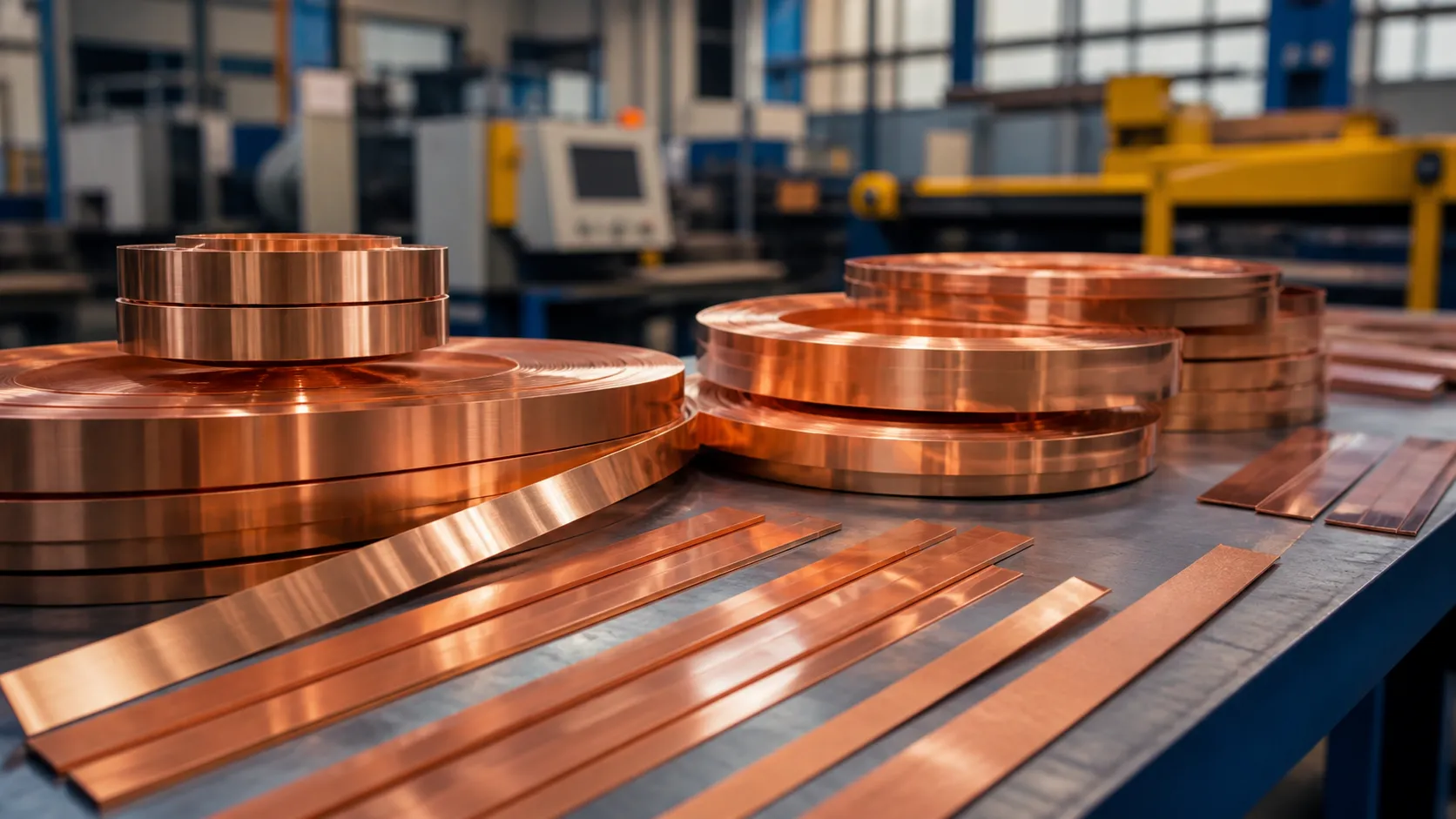
Ordering copper strip for transformer winding starts with a clear technical specification. We support factory-direct supply with custom processing, material selection support, sample delivery, and traceable documentation for global customers.
Step 1: Confirm the Copper Grade and Standard
Specify C11000 / T2 pure copper strip when high electrical conductivity is required for transformer winding. Our copper strip is manufactured in line with ASTM B152 and JIS H3100 requirements.
Include the applicable material grade and standard in the order specification to keep purchasing, inspection, and production requirements aligned.
Step 2: Define Thickness, Width, and Tolerance
Provide the required strip dimensions for the transformer coil design, including:
- Thickness
- Width
- Required dimensional tolerance
- Flatness or other application-specific requirements
We can adjust thickness, width, and hardness to suit individual winding applications. Precision slitting helps deliver copper strip in the dimensions needed for consistent coil production.
Step 3: Select Temper and Edge Condition
State the required temper or hardness based on the forming and winding process. Also define the needed edge and surface condition, particularly where insulation handling and stable coil winding are important.
Our custom processing capabilities include slitting, forming, and surface-related specification adjustments to match the intended transformer winding material.
Step 4: Specify Coil Format, Packaging, and Documentation
Confirm the preferred coil format, spooling method, and packaging requirements before production. Specialized packaging can be arranged to support handling and shipment.
Each shipment includes a traceable Mill Test Certificate (MTC). This documentation supports incoming material checks and traceability throughout the supply chain.
Step 5: Request a Sample for Material Verification
Samples can be supplied for dimensional, hardness, and application testing before a larger order is released. This allows buyers to verify that the copper strip for transformer winding fits their equipment and production requirements.
For standard items, trial orders may be available. Final MOQ requirements depend on the selected dimensions, processing, and customization level.
Why Source Transformer Copper Strip from Fullgreat Metal
Factory-Direct Supply and Precision Slitting
At Fullgreat Metal, we supply copper strip for transformer winding directly from our factory. This direct model helps global buyers source C11000 / T2 pure copper strip without unnecessary intermediary costs. We support custom thickness, width, hardness, surface finish, film coating, and coil packaging requirements.
Our processing capabilities include slitting and forming for electrical copper strip requirements. With controlled dimensions and precision processing, we help customers match transformer coil designs and winding operations. Our high-precision slitting equipment supports consistent strip preparation for demanding applications.
Quality Assurance Under ISO 9001 and IATF 16949
Quality control is built into our production process for transformer winding material. Fullgreat Metal operates under ISO 9001 and ISO/TS16949 quality systems, supported by more than 100 sets of processing and testing equipment.
Each shipment is supplied with a traceable Mill Test Certificate (MTC). This documentation helps buyers verify material records for their C11000 / T2 copper strip orders and maintain traceability across their supply chain.
Export Packaging and Global Delivery
We provide specialized spooling and packaging options to protect copper strip during storage and international transport. Our in-house transport team and fleet support safe, timely delivery for export orders.
With a monthly production capacity of 50,000 tons and nearly 10,000 tons of ready inventory, Fullgreat Metal can support both standard and customized copper strip for transformer winding requirements with dependable global supply.
Conclusion: Selecting the Right Copper Strip for Transformer Winding
Summary of Key Selection Criteria
The right copper strip for transformer winding starts with a clear match between material requirements and coil design. We supply C11000 / T2 pure copper strip with 99.9% high conductivity and custom processing options for global transformer manufacturers.
| Selection Item | What to Confirm |
|---|---|
| Material grade | C11000 / T2 pure copper |
| Applicable standards | ASTM B152 and JIS H3100 |
| Dimensions | Required thickness, width, and tolerance |
| Temper | Hardness and forming requirements |
| Surface and edges | Surface finish and controlled slit-edge condition |
| Coil format | Spooling, packaging, and handling needs |
| Documentation | Traceable Mill Test Certificate (MTC) |
Accurate thickness, width, hardness, and edge quality support stable winding operations. For projects that also require core materials, we can supply CRGO and CRNGO electrical silicon steel in line with IEC 60404 and ASTM A677 requirements.
Next Steps: Specifications, Samples, and Quotation
Provide the required grade, dimensions, hardness, surface finish, coil format, and quantity to receive a factory-direct quotation. Our team supports material selection based on the application and can arrange samples for dimensional and hardness testing.
Each order is backed by ISO 9001 and ISO/TS16949 quality systems, advanced processing and testing equipment, and traceable MTC documentation. With monthly production capacity of 50,000 tons and nearly 10,000 tons of ready inventory, we support custom electrical copper strip requirements with global logistics and export-ready packaging.
Contact Fullgreat Metal at Bruce@fullgreat.com or +86-0755-27062986 for copper strip for transformer winding specifications, sample arrangements, and factory-direct pricing.