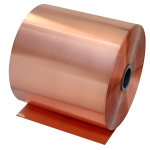


Copper & Copper Alloy Strip – Brass, Phosphor Bronze & Nickel Silver
Copper and copper-alloy strip for electrical components, stamped parts and decorative hardware. Options include copper, brass, phosphor bronze and nickel silver, with additional copper-nickel and bronze materials.
- Supply forms: strip and sheet, depending on material.
- Dimensions: material- and temper-specific thicknesses and widths; see the supply table.
- Conditions: soft, half hard and hard options, with extra-hard conditions for applicable grades.
- Custom supply: thickness, width and coil length to the required material specification.
Send the grade, standard, temper, dimensions and quantity for a quotation.
Copper Strip, Brass Strip & Phosphor Bronze Strip
Fullgreat Metal supplies copper strip and copper alloy strip for electrical components, stamped hardware and formed parts. The range includes copper, brass, phosphor bronze, nickel silver, copper-nickel alloys and other bronze materials, with strip and sheet options according to the selected material.
Choose the alloy for its required conductivity, strength, forming behavior and service environment, then select the supplied temper and dimensions. Copper, brass and phosphor bronze provide different combinations of these properties; a shared copper base does not make their performance interchangeable.
Specifications
Strip & Sheet Dimensions
| Material | Form | Thickness (mm) | Width (mm) | Temper |
|---|---|---|---|---|
| Brass | Strip | 0.1, 0.15, 0.2, 0.25, 0.27, 0.3, 0.35, 0.4, 0.5, 0.6, 0.8–3.0 | 200 | M / Y2 / Y; thickness options vary by temper |
| Brass | Strip | 0.3, 0.35, 0.4, 0.5, 0.6, 0.7, 0.8, 1.0 | 305 | M / Y2 / Y; thickness options vary by temper |
| Brass | Sheet | 0.6–8.0 | 600 | M / Y2; thickness options vary by temper |
| Brass | Sheet | 0.8, 1.0, 1.2, 1.4, 1.5, 2.0, 4.0 | 305 | Y2 |
| Copper | Strip | 0.05, 0.08, 0.1, 0.15, 0.2, 0.25, 0.3, 0.4, 0.5, 0.6, 0.7, 0.8 | 200 | Y2 |
| Copper | Strip | 0.1, 0.15, 0.2, 0.25, 0.3, 0.35, 0.4, 0.5, 0.6, 0.8 | 200 | M |
| Copper | Strip | 0.3, 0.4, 0.5, 0.6, 0.7, 0.8, 1.0 | 305 | Y2 |
| Copper | Strip | 0.15, 0.25, 0.3, 0.35, 0.4, 0.5, 0.6, 0.7, 0.8 | 305 | M |
| Copper | Sheet | 0.8, 1.0, 1.2, 1.5, 2.0, 2.5, 3.0, 4.0, 5.0, 6.0 | 600 | Y2 |
| Phosphor bronze | Strip | 0.2, 0.25, 0.3, 0.35, 0.4, 0.45, 0.5, 0.6, 0.7, 0.8, 1.0, 1.2, 1.5 | 200 | Y2 |
| Phosphor bronze | Strip | 0.2, 0.25, 0.3, 0.35, 0.4, 0.5, 0.6, 0.8 | 200 | Y |
| Nickel silver | Strip | 0.2, 0.3, 0.4, 0.5, 0.8, 1.0 | 200 | Y2 |
| Nickel silver | Sheet | 0.8, 1.0, 1.2, 1.4, 1.5, 1.8, 2.0, 2.5, 3.0, 3.5, 4.0, 4.5, 5.0, 6.0 | 200 | Y2 |
| Bronze | Strip | 0.12, 0.15, 0.2, 0.25, 0.3, 0.4, 0.5, 0.6 | 200 | Y2 |
The combinations above are supply options for the stated material and form. Select the grade and temper alongside the thickness and width. Brass ranges cover several thickness options; the applicable thickness-and-temper combination forms part of the quotation.
Brass wire is also listed in the supply range, with diameters of 1.8, 2.0, 2.2, 2.4, 2.45, 2.5, 2.9, 3.0, 3.15, 3.4, 3.9, 4.0, 4.2, 4.5, 4.9, 5.4 and 5.9 mm. For wire enquiries, state the diameter and intended use separately from strip thickness and width.
Material Families & Grade Options
| Material family | Grade options | Selection focus |
|---|---|---|
| Copper | T2 / TU2 / TP2; C1100 / C1011 / C1220 | Electrical or thermal requirements, joining process and specified copper grade |
| Brass | C2100, C2200, C2300, C2400, C2600, C2680, C2700, C2720, C3501, C3712 | Forming, strength, appearance and alloy composition |
| Phosphor bronze | QSn4-0.3, QSn6.5-0.1, QSn8-0.3; C5111, C5191, C5210 | Elastic behavior, forming needs and supplied temper |
| Nickel silver (copper-nickel-zinc) | C7521, C7701 | Appearance, forming and mechanical requirements |
| Copper-nickel and other bronze materials | Grade specified for the application | Alloy composition, service environment and required product form |
Specify the grade together with its governing standard. Designations from different standards identify material options and require composition and property checks before substitution. Nickel silver is a copper-nickel-zinc alloy; it is a separate family from copper-nickel alloys without zinc as a principal addition.
Temper & Mechanical Requirements
| Supplied condition | Designation | Selection consideration |
|---|---|---|
| Soft | M | Greater forming allowance for bending or drawing; select the grade and thickness for the operation |
| Half hard | Y2 | A balance of supplied strength and forming allowance |
| Hard | Y | Higher cold-worked strength within the same alloy, with reduced forming allowance |
| Extra-hard condition | T | For applications needing a harder supplied condition; availability is grade- and thickness-dependent |
Within the same alloy, cold working generally increases strength while reducing the capacity for further forming. Specify any required tensile strength, elongation or hardness with the grade, thickness and test requirements. Temper labels alone do not define the same mechanical properties across different alloys or standards.
For a bent terminal, consider the tightest bend and the strength needed after forming. For a spring contact, consider elastic performance and repeated deflection as well as conductivity. These needs help distinguish a forming-grade strip from a harder contact material.
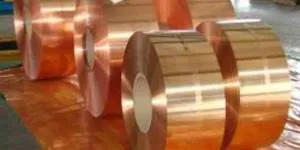
Product Display
Strip coil and supply examples are shown below. The required grade, temper, dimensions and surface condition define the material for your order.


Typical Applications
- Electrical connectors and terminals: balance conductivity, forming and mechanical support.
- Transformers and power-transmission components: select the copper grade and cross-section for electrical and thermal requirements.
- Electronic and telecommunications components: match the alloy and temper to contact behavior, joining and forming needs.
- Automotive components: consider the load, temperature, exposure and production process.
- Decorative hardware: select the material for color, forming and the required finished appearance.
- Lead frames and semiconductor components: define the specified alloy and required dimensional and mechanical properties.
Copper Strip FAQ
Should I choose copper, brass or phosphor bronze strip?
Copper is commonly selected where electrical or thermal conductivity is a priority. Brass combines forming options with mechanical and decorative uses. Phosphor bronze is useful where elastic behavior, strength and wear performance matter. The final choice also depends on grade, temper and the finished component.
How do I select the temper for stamping or bending?
Start with the most demanding forming feature and the strength needed in service. Softer material generally allows more deformation; harder material retains more cold-worked strength but offers less forming allowance. Include the bend geometry or component drawing with your material specification.
Which thicknesses and widths are available?
The table separates strip and sheet options by material and temper. For example, copper strip at 200 mm width includes a 0.05 mm option in Y2 condition, while thicker sheet options have their own listed widths and conditions. Custom thickness, width and coil length can be requested with the grade and temper.
Can I order using an ASTM, JIS, GB, DIN or EN designation?
Include the full grade and product standard in the enquiry. The applicable requirements depend on the alloy family and supply form. Where your drawing allows an alternative, compare composition, supplied condition and required properties before approving the substitution.
Is copper strip the same supply item as copper flat wire or copper-clad material?
This page covers copper and copper-alloy strip and sheet. For flat wire, width, thickness and edge requirements define the wire section. For a layered composite, see FPD726 copper-clad stainless steel strip, which combines a copper or brass surface with a stainless steel core.
Request a Copper Strip Quote
Send the material grade and standard, strip or sheet form, temper, thickness, width and quantity. For coil supply, include the required coil length or weight and any handling constraints. Add the surface, critical tolerances, mechanical or conductivity requirements and delivery destination relevant to your component.
About Fullgreat Metal: Established in 2008, Fullgreat Metal supplies copper and copper-alloy materials, non-magnetic stainless steel strip and wire, and other metal products to customers worldwide. Learn more about our company