Blog
Deburring Stainless Steel Strips for High Speed Stamping

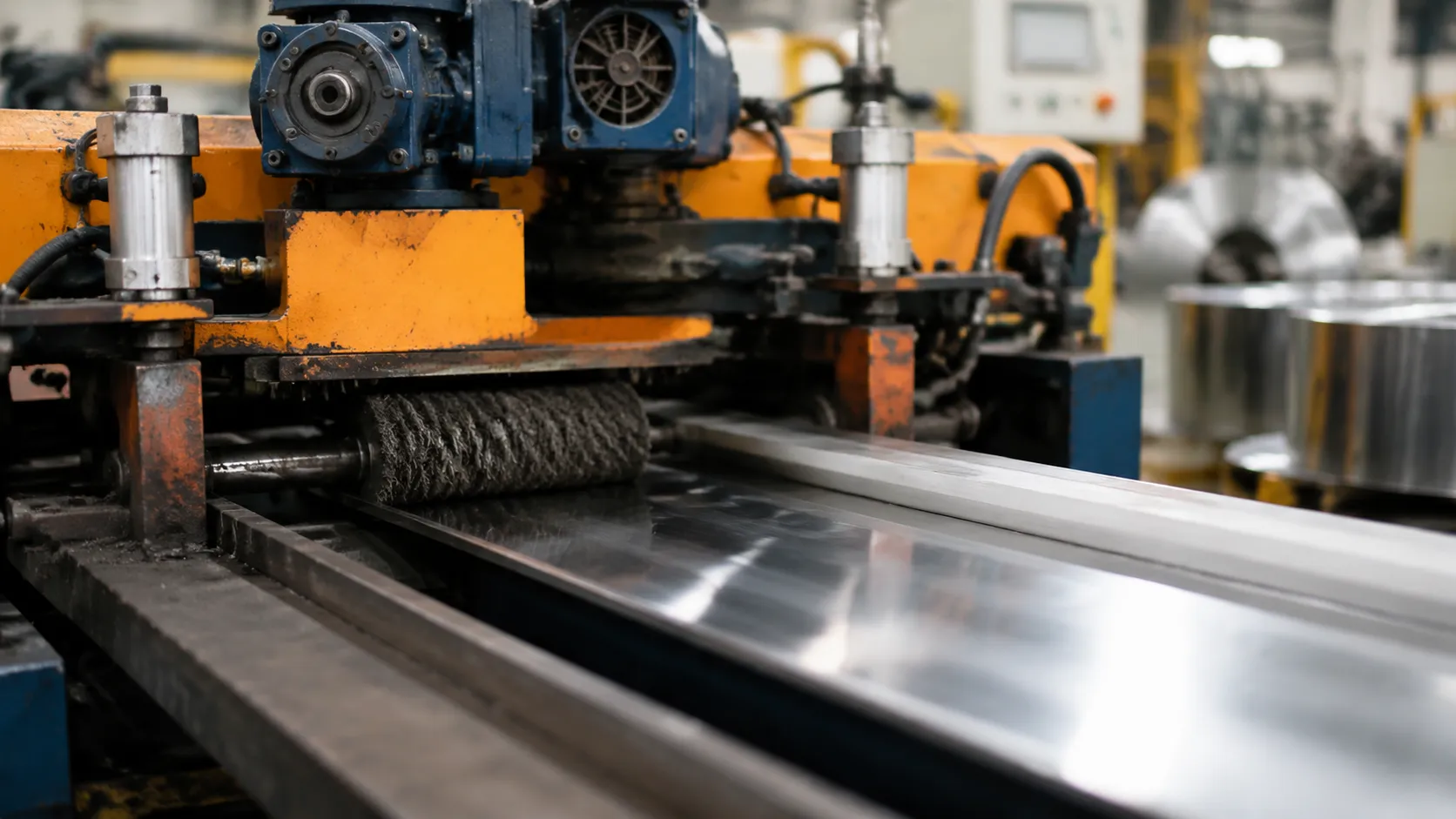
During the precision slitting process, the mechanical shearing action naturally leaves behind sharp, raised imperfections known as burrs. While these microscopic defects might seem negligible, leaving them untreated introduces severe vulnerabilities into your production line. Implementing a dedicated deburring process for stainless steel strips is not just about aesthetics; it is a fundamental requirement to ensure dimensional accuracy, operational safety, and flawless component performance in high-precision manufacturing.
For the fundamentals of stainless steel grades and processing, see our Non-Magnetic Stainless Steel: The Definitive Guide and the How to Cut Stainless Steel Strip guide.
Why Deburring Stainless Steel Strips Is Critical for Manufacturing
The Hidden Costs of Raw Slit Edges (Tool Wear and Micro-Cracks)
Using stainless steel strips with raw slit edges introduces significant hidden financial and operational burdens:
- Accelerated Tool Wear: Sharp micro-burrs act as abrasives against precision manufacturing equipment. As raw strips feed through high-speed stamping presses, these hardened imperfections rapidly degrade expensive tungsten carbide dies, leading to frequent maintenance downtime and premature tooling replacement.
- Micro-Cracks and Structural Failure: The stress concentrated along a raw slit edge creates microscopic fractures. When the material undergoes subsequent bending, drawing, or forming operations, these micro-cracks propagate into catastrophic material failures, splitting the metal and ruining the finished part.
- Safety and Handling Risks: Raw, razor-sharp edges pose a constant safety hazard to warehouse personnel and assembly operators, increasing the risk of workplace injuries and complicating the material handling process.
| Edge Condition | Tooling Impact | Risk of Failure | Handling Safety |
|---|---|---|---|
| Raw Slit Edge | High abrasive wear; shortens die life | High (propagates micro-cracks) | Poor (sharp, hazardous) |
| Deburred Edge | Minimal friction; extends tooling lifespan | Low (smooth stress distribution) | Excellent (safe to handle) |
Edge Conditions Explained: Slit, Deburred, and Round Edges
When ordering stainless steel strips, the edge condition you choose directly impacts your production efficiency and final product quality. Standard custom slitting processes leave specific edge profiles that behave differently during downstream manufacturing.
Here is a breakdown of the three primary edge conditions we deliver:
- Slit Edge: The raw result of the shearing process. It naturally contains a mix of cut and break zones, leaving sharp burrs that can cause handling hazards or tooling issues.
- Deburred Edge: A processed edge where we physically remove the vertical burrs. This results in a smooth, safe-to-handle material that prevents common stamping complications.
- Round Edge: A premium finish where the entire edge profile is completely radiused. A round edge stainless steel strip is ideal for exposed applications and components under constant dynamic stress.
Deburred Edges vs. Fully Rounded Edges: Which Do You Need?
Deburred edges remove vertical burrs while keeping a squared profile — the standard for high-speed stamping where edge quality and feeding consistency matter. Fully rounded edges add a radius across the full thickness, ideal for exposed parts, springs, or applications where sharp corners cause fatigue cracking. Choose deburred for stamping efficiency, rounded for dynamic-stress parts.
How Proper Edge Conditioning Improves High-Speed Stamping
Extending Tungsten Carbide Die Life and Preventing Coil Jams
Conditioned edges extend tungsten carbide die life by eliminating abrasive burrs that grind down tooling. They also prevent coil jams: smooth edges feed predictably through automated straighteners and progressive dies, keeping high-speed lines running without costly stoppages. For the electronics connection, see how edge quality matters in precision strips for electronics.
Sourcing Custom Edge-Conditioned Coils Directly from the Mill
Sourcing directly from the mill ensures you get the exact edge condition your application requires. As a direct manufacturer, we provide custom slitting with deburred or rounded edges, tight tolerances, and MTC documentation with every shipment. For full sourcing guidance, see our Stainless Steel Strip Supplier Guide.
Frequently Asked Questions
Q: Why is deburring important for stainless steel strips?
A: Raw slit edges carry sharp micro-burrs that cause three problems: accelerated wear on expensive tungsten carbide dies, micro-cracks that propagate into catastrophic failures during forming, and safety hazards for handlers. Deburring removes these burrs, extending tool life, preventing edge cracks, and making material safe to handle.
Q: What is the difference between slit edge, deburred edge, and round edge?
A: A slit edge is the raw result of shearing — accurate in width but with sharp burrs. A deburred edge has the vertical burrs removed, keeping a squared profile — the standard for stamping. A round edge is fully radiused across the thickness — ideal for exposed parts and components under constant dynamic stress.
Q: How do burrs damage stamping dies?
A: Hard metal burrs break off inside the stamping die and act as abrasive powder, scratching the workpiece and rapidly wearing down tungsten carbide punches. They also create stress concentrators that cause the strip to split during deep drawing or severe bending. Conditioned edges prevent both failure modes.
Q: Can you supply stainless steel strip with deburred edges?
A: Yes. We pass strip through conditioning rolls to deburr the edges, delivering smooth, safe-to-handle material with tight tolerances. For dynamic-stress applications, we also offer fully rounded edges. Specify your edge condition when ordering for a factory-direct quote.
Protect your tooling with precision deburred edges. Send your specifications — grade, width, thickness, and edge condition — to Bruce@fullgreat.com for a factory-direct quote with MTC documentation.