Choosing the right copper strip for stamping can directly affect part quality, die life, production speed, and material waste.
But with different copper grades, tempers, thickness tolerances, edge conditions, and coil formats available, selecting the right strip is not always simple.
In this guide, you’ll learn how to choose copper strip for stamping operations based on forming requirements, progressive die performance, electrical conductivity, burr control, and feeding stability.
Let’s get started.
Introduction to Copper Strip for Stamping
What Is Stamping and Why Material Selection Matters?
Metal stamping shapes strip material into repeatable parts through punching, bending, forming, and related press operations. For reliable production, the copper strip must feed consistently, form as required, and maintain stable dimensions throughout the run.
Material selection directly affects part quality, tooling performance, and production efficiency. A suitable copper strip for stamping should match the required conductivity, temper, surface condition, thickness, and width of the finished component. Precision-slit strip with controlled edges also helps support smooth high-speed stamping and reduce unnecessary scrap.
Copper Strip Applications in Stamping Operations
Copper strip is widely used where electrical performance and dependable formability are required. C11000/T2 pure copper strip provides 99.9% high conductivity for electrical and manufacturing applications, while C1100 and C1020 copper strip are used for electrical components and transformer windings.
Typical stamped copper applications include:
- Electrical connectors and terminals
- Transformer-related components
- Automotive hardware and connectors
- Electronic and appliance hardware
- Precision metal parts for industrial manufacturing
For specialized requirements, copper alloy strip options such as C2680 brass can provide corrosion resistance and customizable temper conditions. Fullgreat supplies copper strip in customized thicknesses, widths, surface finishes, and packaging formats to support stamping operations.
Key Material Properties for Copper Strip Stamping
Reliable copper strip for stamping depends on more than the alloy name. We control temper, surface condition, thickness, width, and slit-edge quality to help stamping lines run steadily and produce consistent parts.
Hardness and Temper: Balancing Formability and Strength
Copper strip hardness directly affects how the material responds in the press. Softer tempers offer better formability for bends and shaped features, while harder tempers provide greater stiffness for parts that must retain their form. We can customize temper and hardness to match the required stamping operation and finished-part performance.
Tensile Strength and Elongation for Progressive Die Operations
For progressive die stamping, tensile strength and elongation must be balanced. Material with suitable strength supports stable handling through the die, while sufficient elongation helps the strip form without unnecessary cracking during punching or bending. This balance is especially important for high-speed stamping of electrical and hardware components.
Surface Quality and Its Impact on Stamping Performance
A clean, high-quality surface helps protect both the stamped part and the tooling. Consistent surface finish can reduce marking risks during processing and support dependable contact performance in electrical applications. Protective film coating can also be specified where surface protection is required.
Dimensional Accuracy: Thickness and Width Consistency
Stable thickness and width are essential for accurate copper strip stamping. Our precision slitting supports narrow-width strip requirements with controlled edges and high surface quality. Cross-section tolerances can be controlled to ±0.01 mm for demanding punching applications, helping maintain consistent feeding, die alignment, and part dimensions.
Copper Strip Thickness and Width for Stamping Dies
For reliable copper strip stamping, thickness and width must match the die layout, press feeding method, and finished-part design. We provide precision-slit copper strip with custom dimensions for stamping lines, including narrow-width material for high-speed progressive dies.
Standard Thickness Ranges for Stamped Copper Parts
Copper strip thickness is selected according to the required part strength, forming depth, and electrical function. Instead of relying on a fixed standard size, stamping operations should define a thickness that stays consistent from coil to coil.
| Stamping Requirement | Thickness Consideration |
|---|---|
| Fine electrical parts | Thin, stable strip for detailed punching |
| Terminals and connectors | Controlled thickness for fit and conductivity |
| Hardware components | Material thickness matched to part rigidity |
| Formed or drawn parts | Thickness selected with suitable temper for forming |
C11000, T2, C1100, and C1020 copper strip can be supplied to specified thickness requirements. Our processing supports tight cross-section control, including tolerance requirements up to ±0.01 mm where applicable.
Width Selection for Different Stamping Processes
The right strip width helps maintain stable press feeding and reduces unnecessary trim waste. For progressive die stamping, the width should allow space for the part profile, carrier strip, pilot holes, and edge margins.
| Process Type | Recommended Width Approach |
|---|---|
| High-speed progressive stamping | Precision-slit width with controlled edges |
| Connector and terminal stamping | Narrow strip sized for the die progression |
| General hardware stamping | Width matched to blank layout and material yield |
| Multi-out stamping | Wider strip sized for multiple part lanes |
We offer custom-width copper strip, including ultra-narrow slitting, to support efficient material use in stamping dies. For electrical applications, our C1100 copper strip guidance for transformer use also covers a grade widely used where conductivity is a primary requirement.
Tolerance Control and Its Effect on Die Life
Stable thickness and width are essential for predictable die clearance. When copper strip thickness tolerance varies, punch-to-die clearance can change during production. This may increase burrs, affect part dimensions, and place added stress on tooling.
Key control points include:
- Consistent thickness for stable punching clearance
- Accurate slit width for reliable guide alignment
- Smooth slit edges to limit edge-related defects
- Controlled cross-section tolerance for repeatable stamped parts
Precision slitting and burr control support cleaner production in copper strip for stamping. A consistent coil helps protect die performance, reduce avoidable scrap, and maintain dependable output during high-speed stamping runs.
Common Copper Alloy Grades for Stamping Applications
C1100 Copper Strip for Electrical Stamping Components
C1100 copper strip is a practical choice for electrical stamping components where high conductivity is important. We supply C1100 and C1020 copper strip for electrical applications and transformer windings, with customizable thickness, width, temper, surface finish, and protective film options. Precision slitting supports stable material supply for stamped connectors, terminals, and related electrical hardware.
C2680 Brass Strip for General Hardware Stamping
C2680 brass strip is suited to general hardware stamping where corrosion resistance and controlled material properties are required. We provide customizable tempers and precise specifications to match different stamping requirements. Width, thickness, hardness, surface condition, and packaging can be tailored for the production line.
C5210 Phosphor Bronze for High-Elasticity Stamped Parts
C5210 phosphor bronze is not listed within our available copper and alloy strip range. For stamped parts that require specific elasticity or performance requirements, material selection should be confirmed against the drawing, operating conditions, and required temper before production.
How to Select the Right Grade for Your Stamping Project
Select copper strip for stamping based on the part’s functional requirements, not grade name alone. Key points include:
- Electrical performance: Choose high-conductivity copper such as C1100, C1020, C11000, or T2 for electrical applications.
- Hardware requirements: Consider C2680 brass strip where corrosion resistance and customizable temper are needed.
- Stamping process: Match thickness, width, temper, surface finish, and edge condition to the die and feeding system.
- Dimensional control: Specify the required tolerance, including precision slit width and cross-section control.
- Verification: Use samples and material testing to confirm suitability before bulk production.
Our factory-direct copper strip supply supports custom processing, blueprint analysis, sample testing, and traceable Mill Test Certificates for stamping projects.
Copper Strip Temper Selection for Stamping
Temper directly affects how copper strip for stamping forms, feeds, and performs in the finished part. We can tailor hardness to suit the forming load, required stiffness, and surface requirements of the stamping process.
Soft Temper for Complex Forming
Soft-temper copper strip offers high formability for parts with bends, drawn sections, or detailed shapes. It is a practical choice where the material must move smoothly through complex forming operations without excessive resistance.
For stamping copper coil used in electrical and manufacturing parts, soft temper can support easier shaping while maintaining the high conductivity associated with C11000, T2, C1100, and C1020 copper strip.
Half-Hard Temper for General Stamping
Half-hard temper provides a middle ground between forming ability and strength. It is commonly selected for general copper strip stamping where the part needs reliable shape retention without making the material unnecessarily difficult to form.
We can supply copper alloy strip with customized temper, thickness, width, surface finish, and protective film options to match the operating requirements of the press and die.
Hard Temper for Stiff Components
Hard-temper copper strip is suited to stamped parts that require greater stiffness after forming. This option is useful when the component design calls for a firmer material condition and limited deformation during use.
Because harder material places different demands on tooling and process control, consistent strip dimensions and clean slit edges are important for stable production.
Temper, Die Wear, and Tooling Life
Copper strip hardness influences punching load, forming behavior, and die wear. A temper that is too hard for the design may increase stress on tooling, while an overly soft strip may not deliver the required part rigidity.
For high-speed stamping, we support precision slitting with controlled cross-section tolerance up to ±0.01 mm, helping maintain consistent material feeding and edge quality. Careful temper selection, together with burr control and dimensional consistency, helps reduce unnecessary tooling stress and material waste.
Edge Quality and Burr Control for Stamping Copper Strip
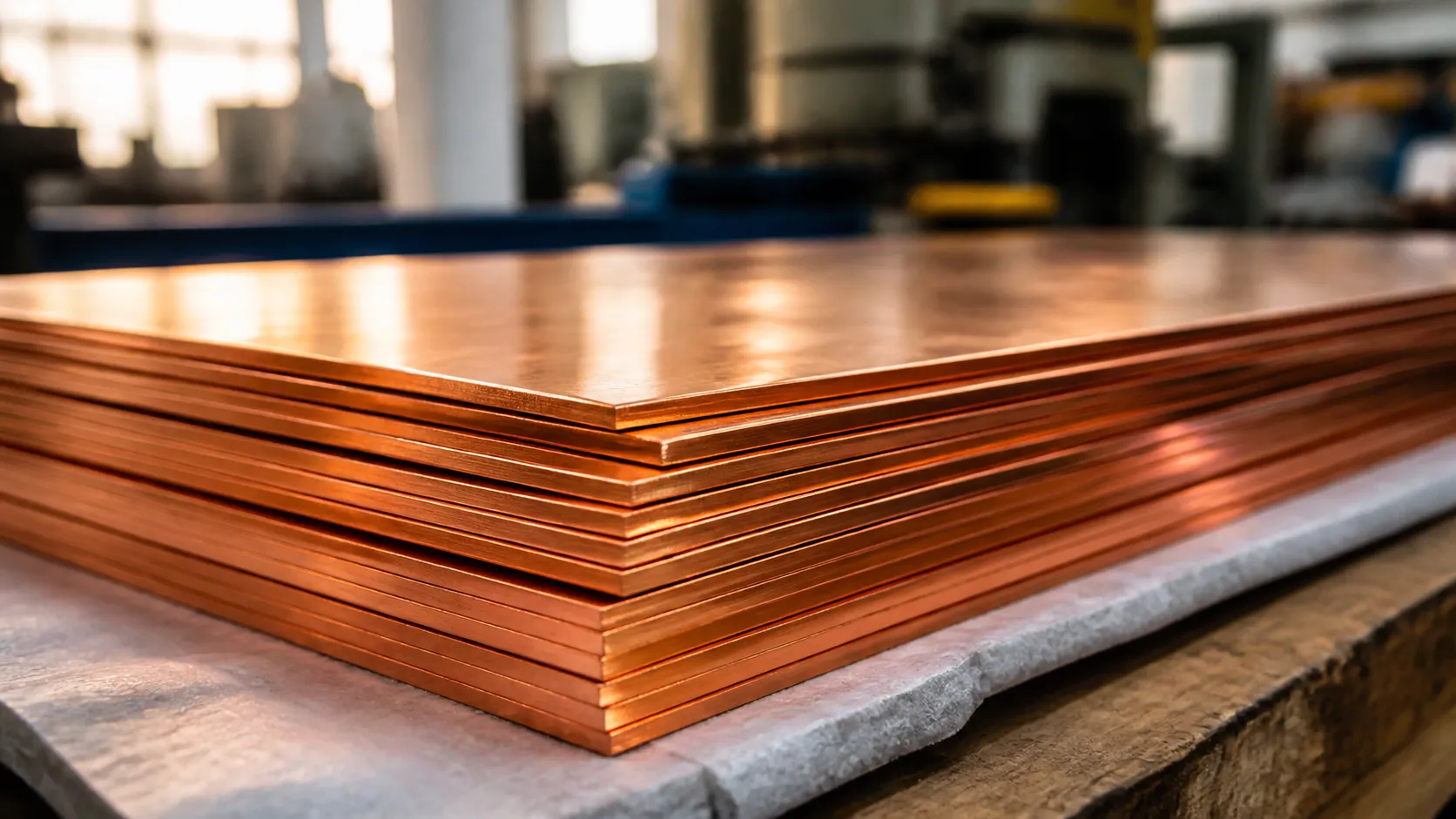
Why Burr-Free Edges Matter in Progressive Dies
For progressive die work, copper strip for stamping needs clean, controlled edges. Edge burrs can disrupt strip movement, affect die alignment, and create inconsistent stamped profiles. They may also increase scrap during high-speed stamping.
Our precision slitting process is designed to provide smooth edges and controlled burr levels for copper strip stamping. This helps support stable feeding and cleaner results in terminals, connectors, and other precision metal stamping parts.
Camber Control and Strip Straightness for Automated Feeding
Straightness is essential when stamping copper coil on automated press lines. Excess camber can cause the strip to track unevenly, creating feeding issues and unnecessary die adjustment.
We provide precision-slit copper strips with controlled cross-section tolerances of up to ±0.01 mm for applicable stamping requirements. Custom width, thickness, temper, and coil packaging can be matched to the feeding conditions of the customer’s stamping equipment.
Slit-Edge Quality and Stamped Part Quality
Slit-edge condition directly affects the appearance and consistency of stamped copper parts. A rough or uneven edge can transfer defects into the finished component and reduce the usable quality of the strip.
Our copper strip is processed with attention to edge burr control and surface quality. For operations that require narrow widths or consistent feeding, we can provide customized precision slitting and protective film coating options. This supports reliable production across electrical, automotive, electronics, hardware, and appliance stamping applications.
Coil Feeding and Winding Requirements for Stamping
Reliable press feeding starts with a copper strip for stamping that is supplied in a coil format matched to the line. Coil dimensions, winding condition, and protection should support stable feeding while keeping the strip surface ready for production.
Coil ID, OD, and Weight for Press Feeding
Coil ID, OD, and weight should be defined around the capacity of the uncoiler, straightener, and feeder. A suitable coil setup helps maintain steady tension and reduces interruptions during high-speed stamping.
| Coil Requirement | Why It Matters for Stamping |
|---|---|
| Coil ID | Must fit the press line mandrel securely |
| Coil OD | Must remain within uncoiler and safety guard limits |
| Coil weight | Should match the lifting and uncoiling capacity |
| Strip width | Must suit the feeder and die layout |
| Strip thickness | Must be consistent for stable feed and accurate parts |
We can provide copper strip in coil form with customized dimensions and packaging based on production requirements.
Winding Direction and Feeding Stability
Winding direction affects how the stamping copper coil enters the feeder. It should be specified to match the press layout, especially where the strip must feed with a particular surface orientation.
A properly wound coil supports:
- Smooth strip payoff
- Stable feeding into progressive dies
- Reduced risk of twisting or uneven tension
- Better control of the finished surface during stamping
For precision metal stamping, we also focus on strip straightness, controlled slitting, and edge quality so the material can move through automated feeding equipment more consistently.
Packaging and Coil Protection for Stamping Lines
Copper surfaces should remain protected from handling damage, contamination, and transport exposure before they reach the press line. Packaging can be customized to suit coil handling, export shipping, and storage conditions.
| Protection Option | Stamping Benefit |
|---|---|
| Protective film coating | Helps protect the surface where required |
| Customized packaging | Supports safer handling and transport |
| Secure coil packing | Helps keep the coil stable during shipment |
| Clear material identification | Supports receiving checks and production traceability |
Our copper strip for stamping is available with customized surface finish, film coating, and packaging. Each supply can be supported by traceable Mill Test Certificates to help quality teams verify the material before production.
Common Stamping Applications for Copper Strip
Electrical Connectors and Terminals
Copper strip for stamping is widely used for electrical connectors, terminals, and transformer-related components. C11000, T2, C1100, and C1020 copper strip provide high electrical conductivity for parts that need reliable current transfer. Consistent thickness, clean surfaces, and controlled slit edges help support stable progressive die stamping.
Automotive Stamped Components
Automotive manufacturers use stamped copper and brass parts in connectors, terminals, and electrical hardware. For these applications, we can provide copper alloy strip with customized thickness, width, temper, surface finish, and protective film options. Tight dimensional control supports repeatable production for high-volume automotive stamping.
Electronic Hardware and Contacts
Precision metal stamping for electronic hardware often requires narrow copper strip with dependable surface quality. Copper strip is suitable for stamped contacts, clips, brackets, and other conductive components. Precision slitting helps maintain edge quality and width consistency, especially where automated feeding and accurate blanking are required.
Industrial and Appliance Stamping Parts
Copper strip and C2680 brass strip are also used for industrial hardware, home appliance parts, and general stamped components. Brass offers corrosion resistance and customizable temper options, while pure copper supports applications requiring high conductivity. Our industrial and electrical copper strip can be supplied in specifications tailored to stamping equipment, including coil format and specialized packaging.
How to Order Copper Strip for Stamping
A clear specification helps us supply copper strip for stamping that runs reliably in your press line. Define the material, dimensions, temper, edge condition, and coil requirements before production. We support custom processing, sample testing, and small trial orders for suitable stock materials.
Step 1: Select the Material Grade and Standard
Choose the grade according to conductivity, forming needs, and part function.
- C11000 / T2 pure copper strip: 99.9% high conductivity for electrical and manufacturing applications.
- C1100 / C1020 copper strip: suited to electrical components and transformer winding applications.
- C2680 brass strip: a practical option where corrosion resistance and customizable temper are required.
For pure copper strip, specifications can be aligned with ASTM B152 and JIS H3100 requirements.
Step 2: Define Thickness, Width, and Tolerance
Provide the finished thickness and slit width required for your stamping die. We offer precision slitting for narrow copper strip and control cross-section tolerance to ±0.01 mm for demanding high-speed stamping applications.
Include:
- Required thickness and width
- Permitted thickness and width tolerance
- Coil or strip quantity
- Whether the material will run in progressive die stamping
Accurate dimensions help maintain stable feeding and reduce unnecessary scrap.
Step 3: Specify Temper and Surface Condition
State the required hardness or temper so the copper alloy strip matches your forming process. Temper can be customized to support different stamping conditions, from parts needing easier forming to components requiring greater stiffness.
Also specify the required surface condition, including:
- Standard surface finish
- High surface-quality requirements
- Protective film coating, where needed
Step 4: Confirm Edge Quality and Burr Limits
Edge quality directly affects die performance and finished-part consistency. For stamping copper coil, specify whether you require controlled slit edges, ultra-narrow widths, or strict burr control.
Precision slitting supports smoother edges for high-speed punching and helps reduce the risk of edge-related issues during stamping.
Step 5: Specify Coil Format and Packaging for Press Feeding
Confirm the coil format and packaging details that match your equipment and shipping requirements. We can provide specialized packaging and spooling arrangements to protect the strip during transport and handling.
For press feeding, identify:
- Required coil format
- Spooling requirements
- Protective film or surface protection needs
- Export packaging requirements
Our in-house transport team supports safe global delivery of copper strip for stamping.
Step 6: Request a Sample for Die Trial
Use a sample batch to verify dimensions, surface quality, temper, and feeding performance before bulk production. Samples allow your team to assess the copper strip under actual die conditions and confirm that the selected specification suits the stamped component.
After sample approval, production can proceed with the confirmed material grade, tolerance, edge condition, and packaging requirements.
Why Source Stamping Copper Strip from Fullgreat Metal
Precision Slitting and Custom Dimensions for Stamping Dies
At Fullgreat Metal, we supply copper strip for stamping with precision slitting matched to press and die requirements. Thickness, width, temper, surface finish, protective film, and packaging can be customized for the production setup. Our processing supports ultra-narrow strip requirements, controlled edges, and cross-section tolerances as tight as ±0.01 mm for demanding stamping work.
Our advanced processing capability helps maintain the consistent strip geometry needed for stable feeding and reliable stamped-part quality. See our high-precision slitting machine capabilities for more on controlled strip processing.
ISO 9001 and IATF 16949 Quality Management
Quality control is built into our supply process for stamping copper coil. Fullgreat Metal operates under ISO 9001 quality management and implements ISO/TS16949 management standards. More than 100 sets of processing and testing equipment support inspection across production.
Each shipment can be supplied with a traceable Mill Test Certificate (MTC). This gives purchasing teams and quality departments documented material information for copper strip stamping applications.
Factory-Direct Supply With Export Packaging Support
As a direct factory manufacturer in China, Fullgreat Metal provides factory-direct supply without intermediary costs. We maintain monthly production capacity of 50,000 tons and nearly 10,000 tons of inventory to support both standard supply and customized orders.
Our in-house transport team manages global export logistics, while specialized packaging options help protect copper strip during shipment and handling. Small trial orders and sample testing are available to support material verification before larger production runs.
Conclusion: Selecting the Right Copper Strip for Stamping
Summary of key selection criteria
The right copper strip for stamping supports stable press feeding, consistent part dimensions, and efficient material use. We match the strip to the part design, stamping method, and required electrical or mechanical performance.
| Selection factor | What to define |
|---|---|
| Material grade | C11000, T2, C1100/C1020 copper, or C2680 brass based on the application |
| Standard | ASTM B152 or JIS H3100 where required |
| Thickness and width | Dimensions suited to the die layout and press feeding system |
| Tolerance | Controlled thickness, width, and cross-section accuracy; up to ±0.01 mm for demanding work |
| Temper | Soft, half-hard, or hard condition based on forming needs and required stiffness |
| Edge and surface | Clean surface, controlled slit edges, and burr control for precision metal stamping |
| Coil format | Packaging, spooling, and protection matched to handling and production needs |
For electrical stamped parts, high-conductivity C11000/T2 material is a practical choice. For hardware stamping, C2680 brass strip provides corrosion resistance and customizable temper options. Our copper strip product range supports custom thickness, width, hardness, surface finish, protective film, and packaging requirements.
Next steps: specifications, samples, and quotation
Provide the material grade, target standard, thickness, width, temper, surface requirement, edge condition, and coil packaging details. Blueprints or part drawings help us review the material setup for your stamping dies.
We support blueprint analysis, precision slitting, sample testing, and small trial orders for suitable standard materials. Each order can be supplied with traceable Mill Test Certificates, supported by ISO 9001 quality management and factory inspection controls. Direct factory supply, available stock, and export logistics help global buyers source stamping copper coil with clear specifications and reliable handling.