Blog
ZAM Steel vs. Hot-Dip Galvanized (HDG): Why Solar & Marine Projects Are Switching to Zinc-Aluminum-Magnesium

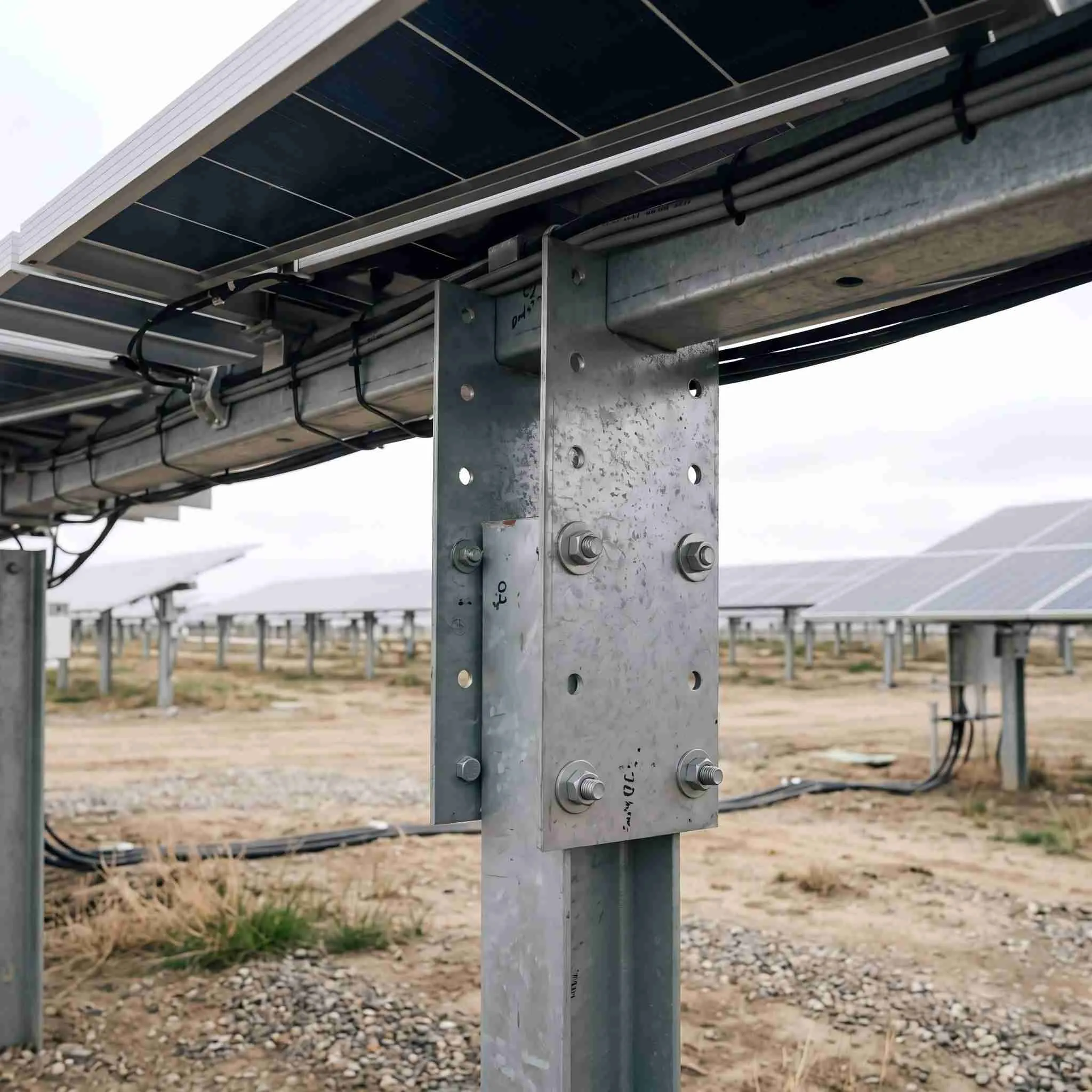
When engineering outdoor infrastructure, evaluating zam steel vs hot dip galvanized (HDG) is critical to balancing long-term corrosion resistance with overall fabrication costs. While traditional hot-dip galvanizing has been the industry benchmark for decades, modern Zinc-Aluminum-Magnesium (ZAM) coated steel is rapidly replacing conventional coatings in solar mounting systems, coastal construction, and agricultural equipment.
This technical guide compares chemical formulations, cut-edge protection mechanisms, 30-year lifecycle costs, and manufacturing capabilities to help procurement engineers make the optimal material choice.
1. What Is ZAM Steel Coating (Zn-Al-Mg)?
ZAM steel is a continuous hot-dip coated alloy sheet composed primarily of Zinc, combined with specific proportions of Aluminum (typically 1% to 11%) and Magnesium (1% to 3%). In standard JIS G 3323 and ASTM specifications, the synergistic addition of Magnesium creates an exceptionally stable barrier layer compared to pure zinc.
Unlike standard batch hot-dip galvanizing—where fabricated parts are manually immersed in molten zinc kettles—ZAM is produced via high-speed continuous coil lines, ensuring strictly uniform coating thickness, zero welding distortion, and superior cold-forming formability.
2. ZAM Steel vs Hot Dip Galvanized: Comprehensive Performance Comparison
To understand why industrial infrastructure is moving away from post-fabrication galvanizing, review the critical engineering parameters below:
| Technical Parameter | ZAM Coated Steel (Zn-Al-Mg) | Hot-Dip Galvanized (HDG / GI) |
|---|---|---|
| Coating Composition | Zinc + 1%–11% Aluminum + 1%–3% Magnesium | Pure Zinc (~99% Zn) |
| Salt Spray Resistance (SST) | Up to 4,000+ hours without red rust | Approx. 500 – 1,000 hours (depending on thickness) |
| Corrosion Resistance Ratio | 5 to 10 Times Higher than standard HDG | Industry Baseline (1X) |
| Cut-Edge Protection | Active self-healing film covers sheared edges | Sacrificial only; prone to red creep on thick edges |
| Forming & Bending | High ductility; no flaking during tight roll-forming | Thick post-dipped coatings may crack under severe bending |
| Manufacturing Workflow | Pre-coated coil: roll-form and punch directly | Cut/weld black steel first, then transport to dip-kettle |
3. The Cut-Edge Self-Healing Mechanism (The Game Changer)
The single greatest limitation of traditional hot-dip galvanized parts is edge failure. When steel sections are cut, punched, or drilled on-site, the bare steel cross-section is exposed to humidity and salt. In standard galvanizing, this leads to rapid edge rusting.
ZAM steel solves this through a remarkable metallurgical reaction:
- When exposed to ambient moisture, aluminum and magnesium ions in the coating dissolve and migrate across the cut edge.
- They react with atmospheric carbon dioxide and chloride ions to form a dense, insoluble protective precipitate known as Simonkolleite (Zn5(OH)8Cl2·H2O) and magnesium-stabilized zinc carbonate.
- This tightly packed patina seals the exposed steel substrate, completely preventing oxygen and moisture from penetrating. Over months of outdoor exposure, the cut edge naturally seals itself without secondary paint or zinc spray touch-ups.
4. Key Industrial Applications: Where ZAM Replaces HDG
Major infrastructure projects are transitioning to ZAM coated coil and strip for three high-stress environments:
- Solar Tracking & Mounting Systems: Utility-scale ground-mount solar arrays operate in desert, coastal, or humid environments for 25 to 30 years. ZAM purlins and brackets eliminate the warping risks of batch hot-dipping while cutting total installation time by 20% to 30%.
- Agricultural & Livestock Sheds: Swine and poultry housing contains severe ammonia (NH3) vapors that strip conventional zinc coatings within 3 to 5 years. ZAM resists high-alkaline and ammonia atmospheres up to 5 times longer.
- Coastal Infrastructure & Cable Trays: Marine splash zones and highway guardrails benefit from the barrier protection of aluminum and the cut-edge recovery of magnesium.
5. Total Cost of Ownership: Is ZAM More Expensive?
While the raw per-ton material cost of ZAM coil is slightly higher than commercial galvanized coils, it generates significant net cost reductions across the total manufacturing cycle:
- Zero Secondary Processing: Eliminates the freight, handling, and labor costs of trucking fabricated parts to third-party galvanizing plants.
- Lighter Coating Weight for Equivalent Life: A 275 g/m² ZAM coating delivers superior corrosion resistance compared to an 800 g/m² batch HDG coating, reducing total steel weight without sacrificing structural lifespan.
- Reduced Maintenance & Warranty Claims: 30-year service life warranties can be achieved with zero painting or anti-corrosion repairs.
To verify chemical composition and coating weights for your technical bids, review our EN 10204 3.1 Mill Test Certificate (MTC) Guide.
Source Certified ZAM Coils & Strips from Fullgreat
Fullgreat supplies prime Zinc-Aluminum-Magnesium coated steel coils, customized slit strips, and cold-formed profile sections for worldwide export.
Available Supply Specifications:
- Thickness Range: 0.5 mm – 4.0 mm | Width Range: 20 mm – 1500 mm
- Coating Weights: ZAM 120 g/m² to ZAM 450 g/m² (Custom alloy ratios)
- Standards: JIS G 3323, ASTM A1046, EN 10346 certified
- Processing: Precision high-speed slitting, cut-to-length, and punching
Quick Quote Response: Submit your required thickness, coating weight, and target tonnage to receive factory-direct FOB/CIF pricing within 12 business hours.
6. Frequently Asked Sourcing Questions
Q1: Can ZAM steel be welded without destroying corrosion resistance?
A: Yes. ZAM possesses excellent weldability via laser, resistance spot, and MAG welding. Zinc vapors are lower than conventional heavy HDG layers, and the adjacent coating layer migrates to protect heat-affected zones.
Q2: What is the typical lead time for ZAM coil export?
A: Standard specifications (1.5mm, 2.0mm, 2.5mm solar bracket thicknesses) are maintained in master coil stock for rapid 7-to-10 day slitting and shipment. Custom coating weights require approximately 20 to 25 days.
Q3: How does ZAM perform in chloride-rich coastal marine zones?
A: In C4 and C5 severe coastal marine environments (ISO 12944), ZAM exhibits corrosion rates 4 to 8 times slower than conventional galvanized steel due to the formation of aluminum-magnesium insoluble patina.