Blog
Steel Flat Wire: Carbon Grades, Strength & Forming

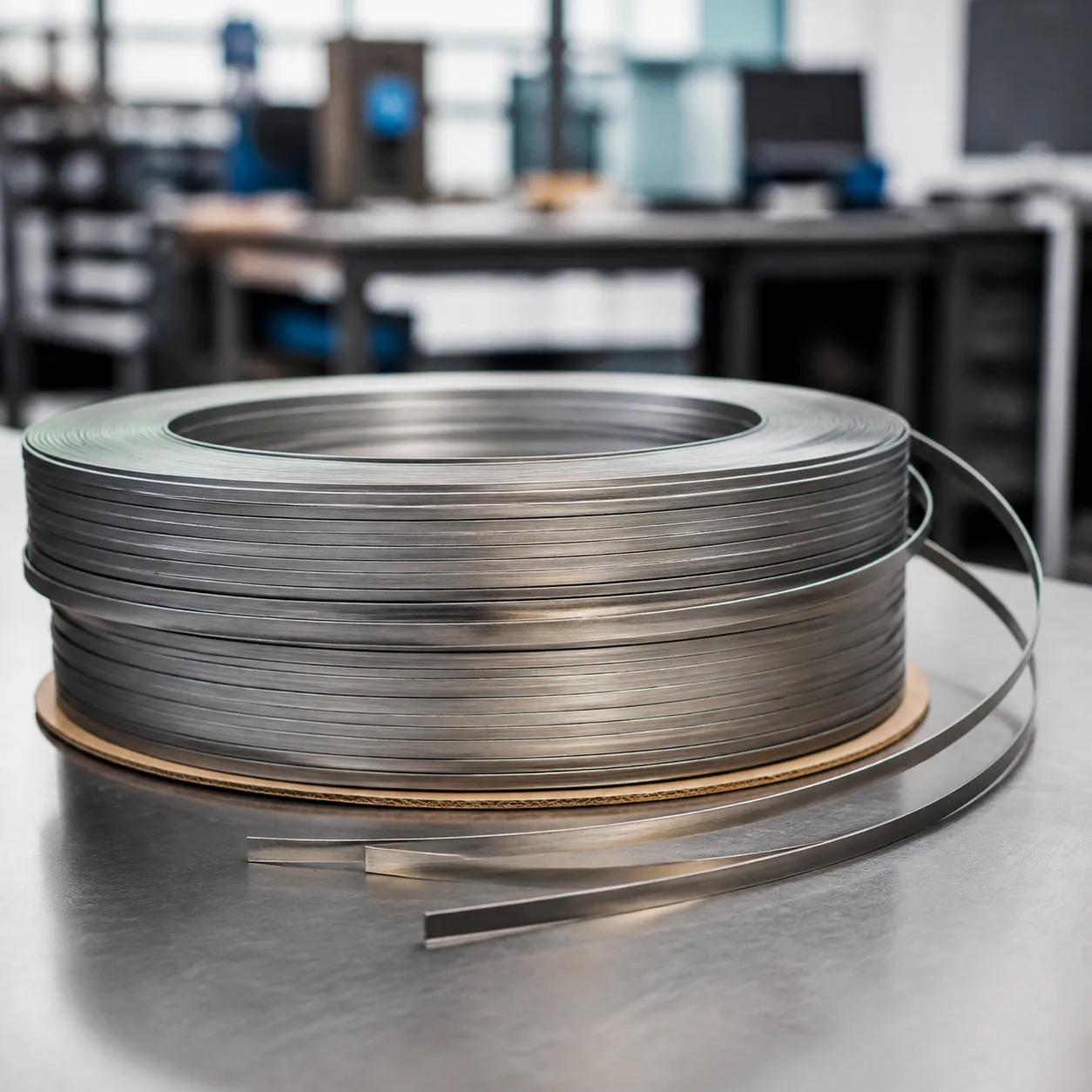
Steel flat wire selection starts with the component’s load and forming requirements, not with “high strength” alone. Carbon content, processing history and supplied condition work together. The material must allow the part to be manufactured and then meet its requirements in service.
Fullgreat supplies flat wire for further component manufacture, with an iron material option for mechanical and industrial parts. For a steel-specific enquiry, use the required grade and condition alongside the section drawing. This guide explains the technical choices behind those requirements.
If the material family is still open, use our flat wire material selection guide to compare the alternatives.
Manufacturing Process: Cold Rolling and Drawing
Cold rolling and drawing change the section and can strengthen steel through cold work. The amount of deformation and any heat treatment influence the resulting properties. “Cold rolled” describes processing; it does not identify one strength or hardness level.
Separate the condition needed when the wire arrives from the properties required after component manufacture. Forming a softer starting material and applying a suitable later heat treatment is a different production route from forming material already supplied at high strength.
Strength and Tensile Performance
Yield strength concerns the onset of permanent deformation; tensile strength describes the maximum engineering stress reached in a tensile test. These answer different questions from elastic stiffness, which governs deflection before permanent deformation.
Increasing the strength of a carbon steel does not produce a comparable increase in its elastic stiffness. If a clip deflects too much but returns to its original shape, changing only to a stronger grade may leave that problem unresolved. Section geometry and loading also matter.
Hardness and Wear Resistance
Hardness measures resistance to localized indentation. It can help control a material specification, but it does not replace the strength, toughness or wear requirements of a component.
For a suitable hardenable steel, quenching can raise hardness, while subsequent tempering adjusts the balance between hardness and toughness. A harder condition may resist indentation yet be less forgiving during forming. The useful target is the property combination needed by the part.
Dimensional Accuracy and Surface Finish
The wire’s section controls fit, while its edges and surface affect contact with tools and mating parts. Surface damage is especially important where the finished component experiences repeated loading.
For drawing details and inspection methods, see our flat wire cross-section, edge and tolerance guide. Keep those requirements separate from mechanical properties: meeting a width tolerance does not establish strength or fatigue performance.
Ductility and Formability
Formability depends on more than carbon content. Cold-worked material and softened material of the same grade can respond differently to a tight bend or stamping operation. Further deformation uses part of the material’s remaining capacity to form.
Evaluate the production route in sequence. If the part needs substantial forming followed by high strength, consider the condition during each stage rather than demanding the finished hardness from the starting wire.
Types of Steel Flat Wire: Carbon Content and Supplied Condition
Low-, medium- and high-carbon descriptions help organize material choices. They do not define complete delivery specifications. Spring steel describes a material choice for spring performance and can overlap these categories.
Low Carbon Steel Flat Wire
Low-carbon steel is often a starting point for general formed parts where substantial deformation is needed and very high final hardness is not the main requirement. Its suitability still depends on grade and prior processing; heavily cold-worked low-carbon wire is not equivalent to softened stock.
For a bent bracket or simple fastening component, first establish whether the required service load can be met in a condition that also permits the forming operation.
Medium Carbon Steel Flat Wire
Medium-carbon steels offer a route to higher final strength through an appropriate combination of composition and processing. Some manufacturing routes use a softened condition for forming, then harden and temper the component afterward.
This makes the manufacturing sequence part of material selection. A medium-carbon designation alone does not tell the buyer whether the delivered wire is ready for a demanding bend or already in its final mechanical condition.
High Carbon Steel Flat Wire
Higher carbon content increases the potential hardness of appropriately hardened plain-carbon steel. High strength can also be developed through controlled wire processing. Neither result follows from the carbon category without considering the actual condition.
When evaluating a high-carbon option, balance the required strength or hardness with the deformation still needed. A softened starting condition and a hardened finished condition perform different jobs in the production route.
Spring Steel Flat Wire
A spring component needs to recover after deflection and resist permanent set. Repeated operation also brings fatigue into the selection. “Spring steel” by itself does not define the required load, travel, strength or service life.
- For a formed spring: distinguish the condition used to make the shape from the final working condition.
- For repeated movement: assess the load cycle, surface condition and finished geometry together.
- For a wet or corrosive environment: include the surface-protection route in the assessment.
Applications of Steel Flat Wire
Hardware and Fasteners
A folded fastening part needs enough formability at its bend and enough resistance to permanent deformation when loaded. If the bend cracks, investigate the supplied condition and forming detail. If the part forms successfully but stays bent in service, examine its load and final strength requirements.
Automotive and Mechanical Components
For a moving mechanism or retaining part, define what happens during service: a steady load, occasional overload or repeated movement. A tensile-strength value alone cannot describe all three. Application-specific approval belongs to the finished component and its actual operating conditions.
Mold and Tooling-Related Parts
Distinguish a support or retaining part from a working surface exposed to indentation or wear. They may need different properties even within the same assembly. Where hardening is part of manufacture, dimensional acceptance must also address the condition after that operation.
Mechanical Springs and Clips
A spring clip that takes a permanent set presents a different problem from one that fractures after repeated movement. The first calls for assessment of stress and resistance to yielding; the second also requires attention to the loading cycle, local geometry and surface condition.
Surface protection is part of this assessment. Corrosion can reduce spring performance, and a finishing process must suit the selected steel and condition. Assess the completed processing route rather than selecting a coating only for its appearance.
Frequently Asked Questions
Does Cold-Rolled Steel Flat Wire Always Mean Hardened Steel?
No. Cold rolling can strengthen material through deformation, while hardening and tempering describe a different treatment route. Use the grade, delivered condition and required properties to define what is needed.
Will a Higher-Carbon Grade Make My Clip Less Flexible?
It may offer a route to greater resistance to permanent deformation, but elastic deflection also depends on the section and geometry. First distinguish excessive elastic movement from permanent set before changing the material.
Can a Hardness Result Establish Spring Life?
Hardness alone does not establish fatigue life. The finished spring’s geometry, loading cycle, surface and environment also matter. Evaluate the component under conditions representative of its use.
What Should a Steel Flat Wire Enquiry Include?
Send the grade if specified, width, thickness and quantity, together with the drawing. Identify the delivered condition, the most demanding forming operation and any later heat treatment or finishing. Separate incoming material requirements from acceptance of the finished part.
View Fullgreat’s flat wire material range and supply information when preparing an enquiry. Include the exact steel designation and required condition so the request can be assessed against the appropriate material and supply specification.