Blog
Stainless Steel Shaped Wire: Forming & Acceptance

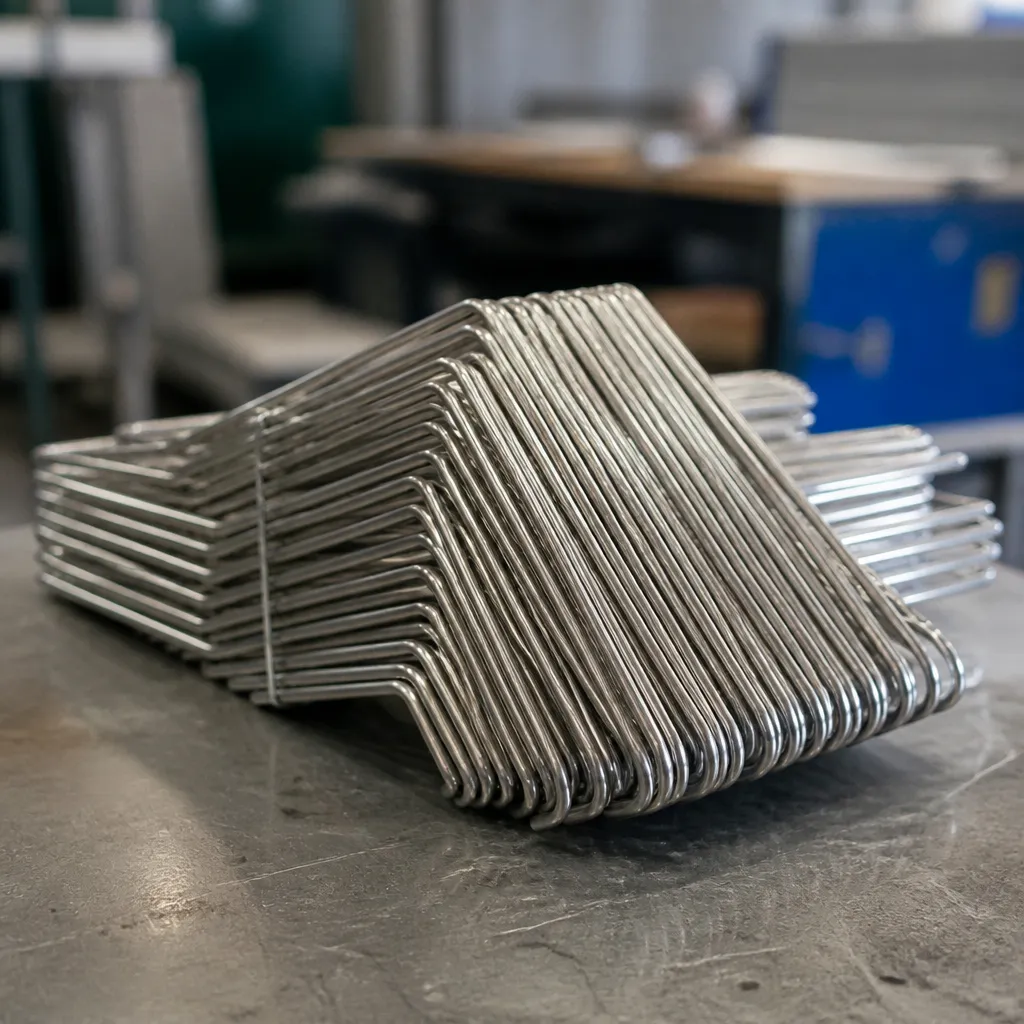
Stainless steel shaped wire should be selected for its critical profile features and the processing that follows delivery. A grade name identifies the material, but the supplied condition and manufacturing history also influence bending, springback and magnetic response.
This guide focuses on non-round stainless sections used for further component manufacture. It explains how to connect grade choice with local geometry and assess the features that matter after forming. For help choosing the outline itself, use our shaped wire profile selection guide.
What Is Stainless Steel Shaped Wire?
Definition and Key Characteristics
Shaped wire has a defined non-round cross-section. In a more complex section, a groove, flange, opening or projection may perform a function that overall width and thickness cannot describe.
Start with the part’s important features:
- Locating feature: the face, step or opening that controls assembly.
- Formed feature: the area that will be bent, stamped or otherwise deformed.
- Functional surface: the area that needs a particular finish, contact behaviour or magnetic result.
These features connect the profile drawing to material selection. A section that fits before processing may still need evaluation after the operation that creates the finished component.
Stainless Steel Grade Considerations for Shaped Wire
304: Consider the Remaining Forming Demand
304 is an austenitic stainless steel with useful cold-forming characteristics. For a profile that will be formed again, assess its supplied condition and the work already introduced during manufacture. The grade name alone does not describe the remaining capacity for deformation at a critical feature.
316L: Include Corrosion Exposure and Joining
316L is a low-carbon, molybdenum-bearing austenitic grade. Its corrosion properties and reduced susceptibility to sensitisation during welding can be relevant when the finished assembly is exposed or welded.
Consider the actual joint and exposure, including places where liquid can collect. A 316L designation does not by itself establish the corrosion performance of every assembled shape.
430: Account for Ferritic Behaviour
430 is ferritic and magnetic, and is considered for mildly corrosive environments. Its forming behaviour differs from austenitic stainless steel. Evaluate the actual bend or stretching operation rather than assuming the same section can use an unchanged process when the material family changes.
201: Compare a Complete Specification
201 is an austenitic chromium-manganese stainless steel. When assessing it as an alternative, compare the specified grade, mechanical condition and service requirements. A lower material price does not establish equivalent forming, corrosion or magnetic performance for the component.
Controlled Magnetic Response: Evaluate the Relevant Condition
Annealed austenitic stainless steels generally have low magnetic response, but cold deformation can change it. In a component with differently worked areas, the region important to the application may need specific attention.
Define whether acceptance concerns the supplied profile, the finished part or both. Where the requirement is local to a sensor or inspection area, identify that region instead of assuming a check elsewhere represents it. Our guide to magnetic changes after stainless steel processing explains the underlying issue.
Profiles and Critical Cross-Section Features
H, U, T, L, Z and Irregular Sections
Fullgreat’s custom profile range includes stainless steel H, U, T, Z, L and irregular sections. Select the geometry for the component, then define the relevant local dimensions and their relationship to the mating surfaces.
For example, a U-section’s outside width may be correct while its opening does not suit the mating part. If the opening controls assembly, it needs its own definition. An outline name cannot replace that information.
Corner Geometry and Subsequent Forming
Identify which edges or corners enter a later bend and which only provide clearance. A dimensional feature may be acceptable in the incoming section but still need assessment in the forming trial.
For detailed definitions of radii, burrs and shape deviations, use our cross-section and inspection guide. Here, the additional question is how the selected stainless condition behaves when those features undergo further processing.
Manufacturing Condition and the Finished Component
Cold Work, Local Deformation and Springback
Austenitic stainless steel work-hardens during cold deformation. Areas that have already undergone substantial forming can have less capacity for another demanding operation than less-worked areas. This is why the sequence matters when a supplied profile is later bent or stamped.
Springback is elastic recovery after the forming load is removed. A change in material or condition can change the resulting geometry even with the same tooling. Evaluate the critical bend and mating feature together, rather than considering only the starting section.
Acceptance Before and After Processing
Separate incoming material acceptance from finished-component acceptance:
- Before processing: assess the specified section, material condition and delivered surface.
- After forming or joining: assess the features and functional properties affected by those operations.
- After finishing: assess fit and appearance in the condition used for assembly.
For an illustrative trial, consider a section that fits a gauge before bending but whose opening changes after forming. Check the forming setup, material condition and finished geometry before tightening the incoming width tolerance. The observed failure concerns the complete route, not necessarily one incoming dimension.
Record the material and condition used for the approved sample, along with the important operations and accepted features. This makes a later comparison more useful than a reference photograph alone.
Applications of Stainless Steel Shaped Wire
Mechanical Guides and Retaining Components
A guide may need a controlled opening, while a retaining part may also need resistance to permanent deformation. Identify the load-bearing and locating features separately. The material condition must suit both manufacture and the part’s working function.
Precision Instruments and Sensitive Assemblies
Where a profile sits near a magnetically sensitive assembly, evaluate the relevant area after the operations that can affect its response. Dimensional fit and magnetic performance are different acceptance questions; neither establishes the other.
Industrial Hardware and Joined Assemblies
For a profile that will be welded or finished, include the joint or treated surface in sample assessment. Evaluate the geometry used for assembly in its final condition rather than relying solely on the incoming section.
Zipper and Clothing Accessories
Dedicated tooth and stop-wire sections require the actual raw-material profile and tooling reference. Ordinary shaped stainless material and finished zipper accessories are different supply forms. Include any finished-part inspection requirement with the profile specification.
Frequently Asked Questions
Can Round-Wire Data Establish the Behaviour of a Complex Profile?
It can provide material background, but the section and processing history still matter. Compare the required profile in the relevant condition, particularly where a local feature is formed again or controls assembly.
Does a Passing Incoming Check Establish the Result After Bending?
It establishes the checked requirements in the incoming condition. Assess the finished geometry and any affected functional properties after the bend when those are part of acceptance.
Is a Non-Magnetic Grade Name Enough for Acceptance?
Use a defined acceptance requirement, test condition and relevant production stage. A material designation does not replace the agreed result for the supplied profile or finished part.
What Should Accompany a Stainless Profile Drawing?
Include the material designation and required condition, length and quantity. Mark the critical local features, describe subsequent forming or joining, and distinguish delivered-material requirements from finished-component checks.
View Fullgreat’s custom shaped metal profile specifications for the material range, size and tolerance conditions, prototype support and quotation information.