Blog
Non-Magnetic Stainless Steel Grades Compared

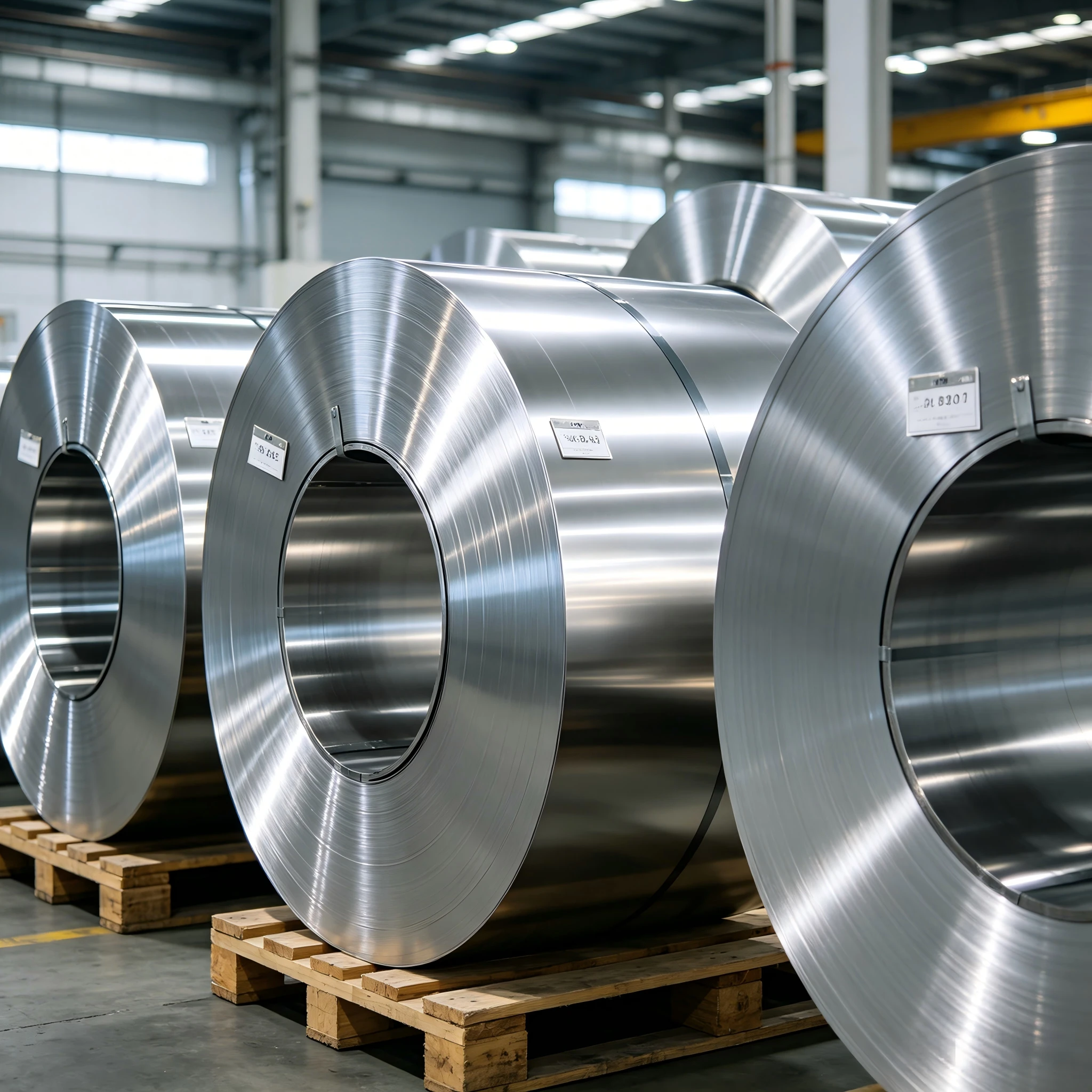
When comparing non-magnetic stainless steel grades, start with the service conditions and manufacturing process. Grades 304, 316, 310, 321 and 904L are austenitic, but they address different corrosion, temperature and fabrication needs. Their magnetic response also depends on the supplied condition and subsequent processing.
Compare the five grade groups by their main alloying differences, service conditions and fabrication requirements. For the broader material background, see our non-magnetic stainless steel guide.
304 vs 316 vs 310 vs 321 vs 904L: Quick Selection
| Grade group | Main selection reason | Application requirements |
|---|---|---|
| 304 / 304L | General fabrication with a balance of corrosion resistance and formability. | Assess chloride exposure and magnetic changes after cold forming. |
| 316 / 316L | Added molybdenum improves resistance to chloride-related pitting and crevice corrosion compared with 304. | Assess chloride concentration, temperature, exposure and crevice conditions. |
| 310 / 310S | High chromium and nickel content for elevated-temperature oxidation resistance. | Specify atmosphere, loading and thermal cycles, together with any wet-corrosion exposure. |
| 321 | Titanium stabilization improves resistance to sensitization-related intergranular corrosion. | Review the welding procedure and verify any magnetic requirement after fabrication. |
| 904L | High nickel and molybdenum, with copper, for selected demanding corrosion environments. | Confirm compatibility with the process fluid, temperature and fabrication route. |
For components with magnetic acceptance requirements, compare materials in the intended condition and after the relevant processing. Include the test method, limit and acceptance stage in the enquiry.
How Alloying and Grade Variants Affect the Choice
Each group uses a different alloying approach to address its main service requirements:
- 304: a familiar chromium-nickel grade, often described by its nominal 18% chromium and 8% nickel alloying concept.
- 316: adds molybdenum to improve localized corrosion resistance in suitable chloride-containing environments.
- 310: uses substantially more chromium and nickel for heat-resistant service.
- 321: uses titanium stabilization to address sensitization-related corrosion.
- 904L: uses a higher-alloy nickel-molybdenum-copper approach for selected severe corrosion conditions.
304L and 316L are low-carbon variants. The lower carbon content reduces the risk of sensitization associated with welding. 310S has a lower carbon limit than 310, but it is not interchangeable with 310 for every design requirement.
State the exact designation and governing product specification when ordering. Confirm composition limits and mechanical requirements for the product form, thickness and supplied condition, then agree the certificate and inspection records required with delivery.
When to Consider Each Grade
304 / 304L: General Fabrication
Consider 304 for general-purpose components where the environment and fabrication requirements suit the grade. Examples include decorative parts, formed housings and general equipment components. Review 304L where welding and subsequent corrosion exposure make low carbon beneficial.
Check cleaning chemicals, chloride deposits and moisture retention rather than relying only on an “indoor” label. If the component will be heavily cold formed, include its magnetic response after forming in the validation plan.
316 / 316L: Additional Localized Corrosion Resistance
Consider 316 or 316L when 304 does not provide enough resistance to the expected chloride exposure. Molybdenum improves pitting and crevice corrosion resistance, but the actual fluid, temperature, deposits and component geometry still determine suitability.
316L is a common option for welded components where low carbon helps control sensitization risk. For immersion duty, provide the fluid composition, temperature and component geometry; include a separate magnetic acceptance requirement when applicable.
310 / 310S: Elevated-Temperature Oxidation Resistance
Consider these grades for furnace-related parts, heat-treatment fixtures and other applications where oxidation resistance at elevated temperature drives selection. Check the exact grade against atmosphere, temperature cycles, loading and required service life.
For high-temperature service, assess oxidation resistance together with mechanical loading, time-dependent deformation and the required service life. Supply the atmosphere and thermal cycle so the grade can be reviewed for the actual duty.
321: Stabilized Material for Relevant Thermal Exposure
Consider 321 where fabrication or service exposure makes resistance to sensitization-related intergranular corrosion important. Its titanium stabilization addresses carbon-related precipitation effects; review the welding and treatment route for the intended duty.
Include thermal history, welding procedure and corrosion environment in the material review. If low magnetic response is required after cold working, specify that condition and the relevant test.
904L: Selected Demanding Corrosion Conditions
Consider 904L where the process environment justifies a higher-alloy material, including suitable acid-handling and chloride-related duties. Supply the fluid composition, concentration, operating temperature and flow conditions when assessing it.
If 316L has failed in service, identify the corrosion mechanism before selecting a replacement. Review 904L and other suitable options against the process conditions, fabrication requirements, availability and component cost.
Comparing Magnetic Behaviour after Forming
Austenitic steels generally show low magnetic attraction in a suitable annealed condition. Cold deformation can produce magnetic martensite in susceptible material. The response varies with composition, deformation and temperature, so there is no single grade-wide permeability value for every finished part.
Where cold forming is severe, austenite stability is a useful selection factor. Compare suitable grades through representative forming trials and measure the finished features against the customer’s requirement.
If a permeability limit applies, agree the method, relevant conditions and test locations. Ferrite content and relative permeability are different quantities. Our magnetic testing guide explains the available approaches and their limitations.
Compare Cost and Mechanical Requirements on the Same Basis
Obtain quotations for the same product form, dimensions, condition, finish and quantity. Include processing, testing, yield and delivery requirements to establish a comparable cost for each option.
Specify the strength and ductility needed for the component. Check the applicable requirements for the product form, thickness and condition; annealed and cold-rolled tempers can have different mechanical properties.
A more highly alloyed grade is not an automatic substitute. A proposed change must also meet fabrication, strength, corrosion, magnetic and contractual requirements.
What to Send for a Grade-Specific Enquiry
- Service conditions: environment, chemicals, temperature, loading and required service life.
- Material designation: exact grade and product specification, or the options under consideration.
- Dimensions and condition: product form, thickness, width or profile, tolerances, finish and temper.
- Fabrication route: forming, welding, machining, heat treatment or plating after delivery.
- Acceptance requirements: mechanical properties, magnetic test conditions and any application-specific inspection.
- Order details: quantity, destination, delivery needs and required records.
Send the selected grade, form and specification with your required quantity and delivery date. Availability and supply conditions can then be confirmed for the production plan.
Frequently Asked Questions
Is 316 always better than 304?
No. Its molybdenum addition can help with localized corrosion in suitable environments, but the extra alloy content may not benefit a component whose requirements are already met by 304.
Does 321 replace 304L for all welded components?
No. Stabilized and low-carbon grades address related corrosion concerns through different approaches. Select using the fabrication route, service temperature and corrosion conditions.
Which grade has the lowest magnetic permeability?
A grade name alone cannot establish the lowest result for your component. Define the limit and test conditions, then compare suitable material in the required state, including after forming when relevant.
Is FPD806 equivalent to one of these five grades?
FPD806 is Fullgreat’s proprietary non-magnetic stainless steel designation. Evaluate its own specifications against your application and any material designation required by the drawing.
Explore Stainless Steel Strip and Coil Options
For grade-specific strip and coil enquiries, review Fullgreat’s stainless steel range and send the required designation, dimensions, condition and quantity. Availability and order requirements will be confirmed for your specification.
View Stainless Steel Strip & Coil Options →
If you are evaluating proprietary non-magnetic strip rather than purchasing a specified standard grade, review FPD806 product specifications as a separate material option.