Blog
Industrial Stainless Steel Wire Sourcing Guide: Specifications & Grades

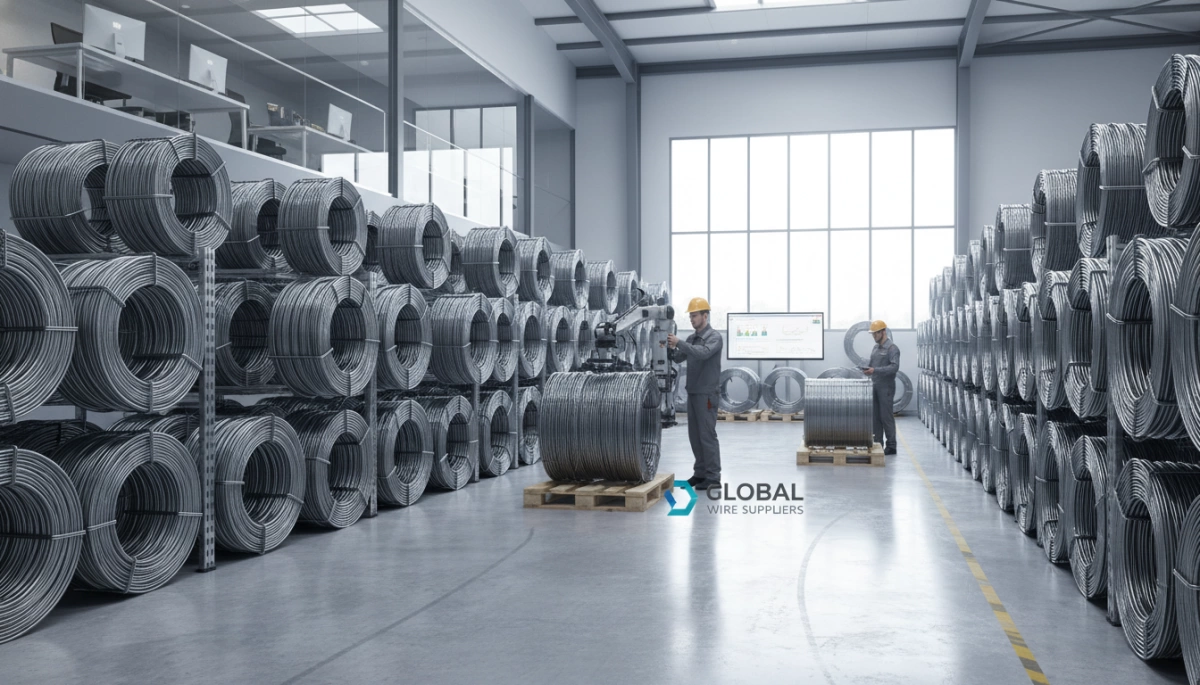
For purchasing directors, spring manufacturers, and industrial engineers, selecting a certified stainless steel wire supplier is a critical link in protecting workshop production schedules. Managing downstream automated forming cells requires raw metal stock with stable mechanical dimensions, uniform tensile profiles, and flawless surface finishes to mitigate tool wear and unexpected line disruptions. This guide covers wire drawing metallurgy, material grades (including high-strength and precision grades), tempers, tolerances, pricing, and supplier evaluation so you can source the right wire for your application.
For a broader overview of material grades, properties, and applications, refer to our Non-Magnetic Stainless Steel: The Definitive Guide.
The Metallurgy of Wire Drawing: Microstructure & Magnetism
Understanding how drawn metal behaves during high-speed cold forming requires a deep dive into atomic grain orientations. The core properties of industrial wire rely directly on its underlying crystal lattice structures:
- Austenitic Phase (Grades 304, 316, 302, 301): Features a stable Face-Centered Cubic (FCC) grain arrangement. Heavily enriched with Nickel, this lattice provides exceptional ductility and corrosion resistance, remaining naturally non-magnetic in a fully solution-annealed state. The science behind this is explained in our crystal structure guide.
- Ferritic & Martensitic Phases (Grades 430, 410): Configured with a Body-Centered Cubic (BCC) matrix, making them inherently ferromagnetic. Highly preferred for localized wear resistance or knife screens, but limited in chemical environments.
Grade Selection & Performance Windows
High-performance wire is defined by a tight mechanical-property window and precise chemistry. Match the grade to the duty cycle:
- 301 / 302 (High-Strength Springs): Through a high cold-drawing reduction ratio, these grades reach a superior spring temper with excellent elasticity and fatigue resistance. 301 reaches the highest tensile strength and is the first choice for compression and torsion springs; 302 is slightly more corrosion-resistant.
- 304 / 304L (General Purpose): The universal balance of formability and corrosion resistance; the low-carbon “L” variant resists sensitization during welding.
- 316 / 316L (Corrosion Specialist): Adds 2–3% molybdenum for a higher PREN (Pitting Resistance Equivalent Number), making it essential for marine hardware and offshore use.
- 410 / 420 (Wear & Fasteners): Martensitic, hardenable grades for precision screens and fasteners.
A grade’s PREN ranks its resistance to chloride pitting; verify it with documented ASTM B117 salt-spray testing, especially for safety-critical or marine components.
The Cold Work Effect: Managing Strain-Induced Martensite
A frequent challenge for spring makers is managing the physical shifts that happen during aggressive cold-drawing processes. As raw rod is pulled through precision reduction dies, intense mechanical stress forces a localized martensitic transformation.
This structural phase change shifts stable FCC austenite into strain-induced martensite, escalating the alloy’s hardness and causing an increase in relative magnetic permeability (μr). For general applications, a slight magnetic pull is perfectly normal, but for medical devices or sensitive sensors, keeping μr strictly controlled is a non-negotiable parameter. The relationship between cold deformation and material behavior is explored further in our cold rolling reduction ratio guide.
⚠️ Critical Permeability Notice for High-Precision Sectors
If your components operate inside medical imaging arrays or high-frequency electronics where stray fields distort instrumentation, standard cold-drawn stock will fail parameters. To maintain absolute neutrality, buyers must specify certified low-permeability parameters and verify each lot with ASTM A342 permeability testing. Review our advanced material options on our dedicated non-magnetic stainless steel specifications page to align exact μr thresholds. You can also verify incoming material with the methods in our guide to testing if stainless steel is non-magnetic.
December 2026 Wholesale Price Matrix (FOB China Ports)
*Technical Selection Notice: Pricing varies based on fine gauge vs. heavy diameter reduction passes, surface finishes, and temper requirements. Prices are indicative and should be confirmed against current LME indices before quoting. Precision grades hold a diameter tolerance of ±0.001 mm (±0.002 mm for spring-temper wire). Review full raw coil profiles on our stainless steel coil/strip/plate category page.
| Alloy Grade | Available Formats & Finishes | Mechanical Temper Range | FOB China Reference Price |
|---|---|---|---|
| Austenitic 304 / 304L | Binding, Tying, Mesh Wire | Bright, Matte | Soft Annealed / 1/4 Hard | USD 2.30 – USD 2.60 / kg |
| Marine 316 / 316L | Rigging, Saltwater Mesh | Clean / Dull | Annealed / Spring Temper | USD 3.10 – USD 3.60 / kg |
| Spring-Type 301 / 302 | Compression & Torsion Spring Wire | Soap, Bright | High Tensile Spring Temper | USD 2.40 – USD 2.80 / kg |
| Martensitic 410 / 420 | Precision Screen, Fastener Wire | Clean | Hardened / Wear-Resistant | USD 1.50 – USD 1.90 / kg |
For heavy automotive framing elements or non-critical workshop assemblies that remain isolated from chloride pitting, balancing budgets with high-yield carbon substructures helps mitigate total project costs. We streamline container logistics by packing premium wire shipments alongside direct raw assets from our automotive-grade high-strength steel for automobile run, decreasing handling complexities at destination ports.
Evaluating a Global Stainless Wire Supplier: 4 Benchmarks
To avoid production delays on automated assembly lines, procurement managers should enforce a strict verification checklist before shortlisting any stainless steel wire manufacturer:
- Full MTC Traceability: Every shipped spool or coil must link to a verified Mill Test Certificate showing authentic chemical balances and exact tensile properties, protecting your supply chain from material substitution risks.
- Dimensional Gauge Control: Confirm the supplier holds tight diameter tolerance (±0.001 mm for precision grades) and uniform coil tension, so high-speed headers and forming cells run without jams or micro-failures.
- Surface & Corrosion Validation: Molybdenum in 316L builds a resilient chromium oxide passive layer that protects braiding or weaving mesh against pitting in marine salt-spray zones; request ASTM B117 results. A grade-by-grade comparison is available in our stainless steel grades comparison guide.
- Processing & Component Integration: Check whether your vendor supports custom flat, square, or complex geometry drawing, and cut-to-length wire combined with stamped hardware to eliminate tolerance stackups. We handle this through our special-shaped steel capabilities and custom metal parts workshop.
Streamlining High-Volume Orders
For large-scale hardware distribution net operations, coordinating diverse metal shapes from a single vendor lowers overhead. Importers can safely mix precision spools with structural bars drawn directly from our automated Round Bar lines, keeping your freight operations cost-effective and completely on schedule.
Frequently Asked Questions
Q: What is the best stainless steel wire grade for high-strength springs?
A: 301 and 302 are the standard choices. Through a high cold-drawing reduction ratio they reach a superior spring temper with excellent elasticity and fatigue resistance — 301 delivers the highest tensile strength, while 302 is marginally more corrosion-resistant. 304 works for lighter spring duties, and 316/316L is chosen when marine or chemical corrosion resistance is the priority, accepting somewhat lower strength.
Q: What is the difference between 304 and 316 stainless steel wire?
A: 316 adds 2–3% molybdenum to 304’s base chemistry, giving a higher PREN and much better resistance to chloride-induced pitting — essential for marine hardware and offshore infrastructure. 304 is the cost-effective general-purpose choice. Both are austenitic and non-magnetic in the annealed state; 316 keeps low permeability more reliably under cold working.
Q: How tight are the dimensional tolerances on precision stainless steel wire?
A: Precision grades hold diameter tolerances around ±0.001 mm for standard and marine grades, and ±0.002 mm for spring-temper wire. This gauge consistency is critical for high-speed heading, medical devices, and fastener production to avoid jams and micro-failures.
Q: What is the difference between 302 and 304 stainless steel wire?
A: Both are austenitic grades with similar corrosion resistance, but 302 has a higher carbon content (up to 0.15%), which allows it to be work-hardened to higher tensile strengths — making it the preferred choice for compression and torsion springs. 304 (max 0.08% carbon) offers better corrosion resistance in welded applications and is the general-purpose workhorse for binding, tying, and mesh wire.
Q: How does cold drawing affect the magnetic properties of stainless steel wire?
A: Cold drawing induces strain-induced martensitic transformation in austenitic grades like 304 and 302, converting non-magnetic FCC austenite into magnetic BCT martensite. This can raise the relative permeability (μr) significantly, depending on the reduction and the grade’s stability. For applications requiring strictly low permeability (medical, sensors), specify a stable high-nickel grade (316L, 310, 904L) or certified low-permeability wire, and verify with ASTM A342 testing.
Q: What temper options are available for stainless steel wire?
A: Common tempers include soft annealed (maximum ductility), 1/4 hard, 1/2 hard, 3/4 hard, and full hard (maximum tensile strength), plus spring temper for demanding spring applications. The temper is achieved through controlled cold drawing and optionally intermediate annealing. Specify your required tensile strength or temper grade when requesting a quote so the supplier can match the correct drawing schedule.
Q: What specifications should I provide when requesting a wire quote?
A: Provide the alloy grade (301, 302, 304, 316, 410, etc.), wire diameter (in mm or AWG) with tolerance, required temper or tensile strength, surface finish (bright, matte, soap-coated, etc.), and total volume. If the wire will be used in sensitive magnetic applications, also specify the maximum magnetic permeability (μr) and ASTM A342 testing. A reliable supplier should confirm availability, lead time, and provide an MTC with chemical and tensile data.
Lock in your direct factory metal quotation within 12 hours. Raw wire alloy surcharges and logistics container dynamics adapt weekly. Review our complete gauge charts and processing capabilities on our official stainless steel products range page, or submit your comprehensive RFQ metrics (Alloy Grade, Wire Diameter ± Tolerance, Temper/Tensile Strength, and Volume Weight) directly to our engineering division at Bruce@fullgreat.com to secure an optimized wholesale offer.