Blog
Industrial Stainless Steel Gratings Guide: Specification & Sourcing

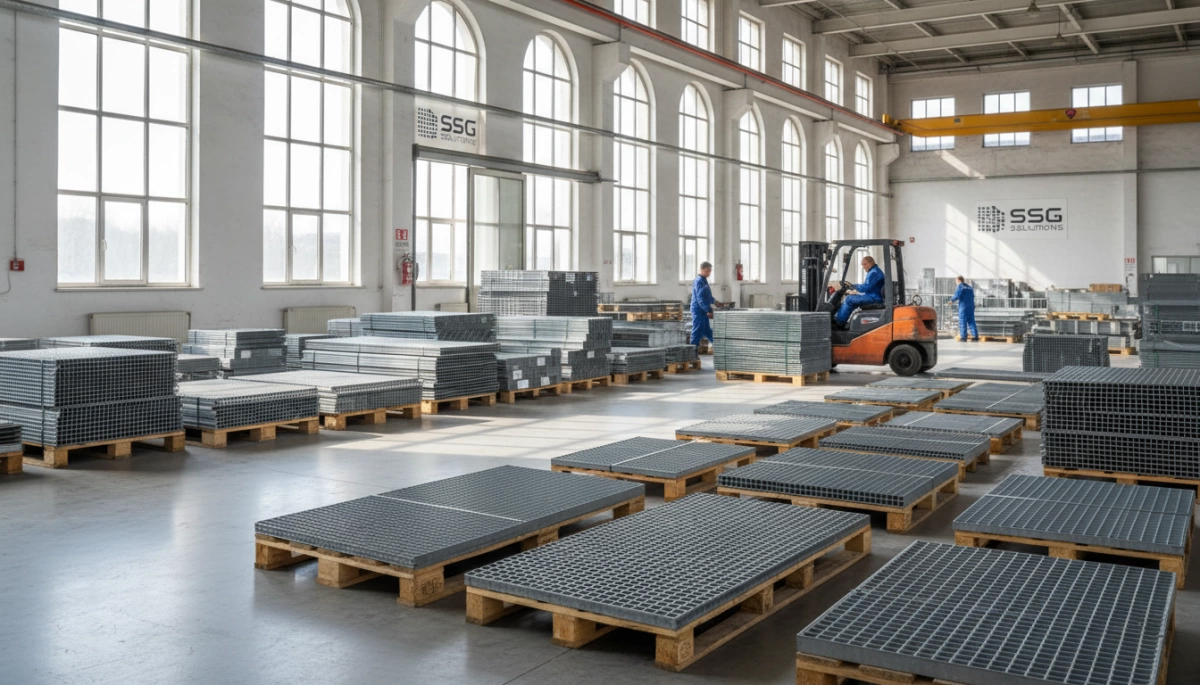
When architectural contractors, EPC engineers, and facility directors shortlist a stainless steel gratings supplier, their core objective extends beyond simple cost per square meter. Managing deep industrial safety mandates requires high-strength flooring capable of enduring extreme mechanical spans, resisting harsh chemical washdowns, and maintaining strict load configurations without structural failure or premature degradation. This guide covers grating structures, material grades, fabrication methods, load specifications, and supplier evaluation so you can source the right panel for your project.
Mechanical Framework: Understanding Grating Structures
Industrial bar grating is engineered as a highly rigid, open-mesh platform. Its structural integrity relies on the cross-sectional mechanics of two primary components interacting within a load-bearing grid layout:
- Bearing Bars: Continuous flat metal running vertically to take the brunt of operational traffic loads. Their thickness and height dictate the overall cross-sectional mechanical stiffness of the panel.
- Cross Bars: Perpendicular locking bars running horizontally. These connect the bearing bars seamlessly via automated forge welding or heavy swaged hydraulic insertions to prevent twisting or buckling under lateral forces.
This open infrastructure yields high strength-to-weight metrics, optimal drainage rates, and clear ventilation flow, rendering it the standard for trench cover grating, catwalk industrial steel walkway grating, and industrial stair tread grating.
Structural Material Sorting: 304 vs. 316 vs. 316L
While galvanized options fail rapidly under constant moisture or chemical exposure, specifying austenitic compositions locks in long-term structural durability. Choosing the proper grade involves matching the environment to the specific alloy properties:
- Grade 304 (General Purpose Benchmark): Highly cost-effective for indoor mezzanine platforms, machinery framing, and commercial drainage lines where environmental moisture remains mild.
- Grade 316 (Marine & Offshore Grating): Fortified with explicit Molybdenum (Mo) targets to disrupt electrochemical corrosion. Mandatory for coastal platforms, offshore oil rigs, and desalination channels.
- Grade 316L (Low-Carbon Integrity): Optimized for heavily welded networks exposed to aggressive food acids, breweries, and pharmaceutical washdowns, preventing carbide precipitation in heat-affected zones. The low-carbon marine grade is discussed further in our 316L stainless steel deep-dive.
If your manufacturing line operates around hyper-sensitive sensors, MRI rooms, or complex electronics where stray magnetic fields can distort calibrations, review our specialized technical criteria on our dedicated non-magnetic stainless steel materials directory to isolate low-permeability parameters. A broader comparison of grades is available in our stainless steel grades comparison guide.
Processing Variations: Welded vs. Press-Locked Grid Formats
As a leading stainless steel grating manufacturer, we adapt our fabrication methods to match the aesthetic and structural requirements of your specific application:
1. Electro-Forge Welded Grating
Utilizes massive hydraulic pressure and intense electric currents to fuse cross rods deep into the bearing bars. This creates a homogeneous, single-piece structural panel designed to withstand heavy rolling traffic, forklift loads, and rugged industrial walkways.
2. Press-Locked and Swage-Locked Grating
Utilizes high-precision automated hydraulic press-assembly loops to interlock slotted bars together under intense force. This process avoids high heat cycles, delivering clean geometric lines, flush top orientations, and uniform bar spacing preferred for architectural ventilation screens, building facades, and tight-mesh ADA-compliant public access lines.
⚠️ Critical Weld Post-Treatment Protocol
To ensure complete long-term rust resistance along fused intersections, any specialized stainless steel gratings supplier must enforce mandatory chemical pickling and passivation post-welding. This essential chemical immersion removes high-temperature scale residues and iron contaminations, instantly regenerating the protective chromium oxide passive layer to safeguard your load boundaries against micro-pitting.
December 2026 Reference Guide: Load Tiers & Pricing Parameters
*Technical Selection Notice: The following parameters focus on raw volume distributions before custom cut-to-size notches or banding modifications are calculated. Prices are indicative and should be confirmed against current LME indices before quoting. Review full stock profiles on our stainless steel product range page.
| Grating Specification | Recommended Structural Span | Surface Slip Profile Options | Indicative FOB Price Basis |
|---|---|---|---|
| 304 Standard Welded Grid | Catwalks, Indoor Walkways, Light Racks | Smooth / Plain Finish | USD 2.20 – 2.60 / kg (bulk) |
| 316 Marine Grade Welded | Offshore Catwalks, Chemical Pit Covers | Serrated Anti-Slip Surface | USD 3.20 – 3.80 / kg (surcharge added) |
| 316L Press-Locked Mesh | Pharma Flooring, Architectural Facades | Polished / Brushed Ra Controlled | Custom project matrix quoted |
For peripheral plant infrastructure elements that remain insulated from chemicals or hygiene regulations, engineers often substitute stainless with economical carbon frameworks to curb over-specification. We streamline your procurement by bundling high-end stainless grating with structural carbon lines, utilizing our direct export channels for quality hot-dip galvanizing steel coils to secure competitive landed costs.
Vetting Your ISO Certified Grating Supplier Checklist
Before releasing a purchase order for global infrastructure projects, ensure your manufacturer passes four engineering parameters:
- Deflection Limits Verification: Require the engineering group to provide certified load-span metrics tracking clear deflection limits under specific static and uniform vehicular stress variables.
- Original Mill Traceability: Demand clear EN 10204 3.1 certificates mapping heat numbers back to chemical logs, especially for marine-grade 316 components.
- In-House Custom Fabrication: Confirm capabilities regarding custom cut-to-size shaping, laser framing, and peripheral sub-assembly production. We insulate our clients from coordination delays by handling complex component builds via our integrated custom metal fabrication services.
- Integrated Hardware Sourcing: To minimize component mismatched connections, ensure your supplier provides accompanying support bars and fasteners. Our facility supports these needs directly through our automated Round Bar drawing lines.
Frequently Asked Questions
Q: What is the difference between welded and press-locked stainless steel grating?
A: Welded grating (electro-forge welded) fuses cross rods into the bearing bars under high heat and pressure, producing a single-piece panel suited for heavy rolling loads, forklift traffic, and industrial walkways. Press-locked or swage-locked grating interlocks slotted bars under high mechanical force without high heat, delivering cleaner geometric lines and flush surfaces ideal for architectural facades, ventilation screens, and public access areas. Choose welded for load-bearing strength and press-locked for aesthetics and tight tolerances.
Q: Which stainless steel grade should I choose for outdoor marine grating?
A: For coastal platforms, offshore structures, and other chloride-rich environments, specify 316 or 316L. The molybdenum content (2–3%) in 316 provides much stronger resistance to pitting and crevice corrosion than 304. Use 316L for heavily welded assemblies to prevent carbide precipitation in heat-affected zones. For extreme environments, consider higher-alloy grades such as 904L or 254 SMO.
Q: What load specifications should I provide when requesting a grating quote?
A: Provide the required design load (uniform and point loads in kN/m² or lbs/ft²), the clear span between supports, and any deflection limit requirements. Common industry references include building codes and standards such as ASTM A1011 (for bar grating load tables) and project-specific engineering specifications. A reliable supplier should be able to provide load-span-deflection tables for the specific bar size and spacing you need.
Q: Why is pickling and passivation important after welding grating?
A: Welding introduces high-temperature scale and can deplete the chromium oxide passive layer, leaving the weld zones vulnerable to rust and micro-pitting. Chemical pickling removes scale and iron contamination, and passivation regenerates a clean, uniform chromium oxide layer that restores the material’s corrosion resistance. This post-treatment is essential for marine and food-processing applications where long-term durability matters.
Lock in your direct factory metal quotation within 12 hours. Raw global steel indices, alloying elements, and freight parameters vary weekly. Review our structural layout capabilities and loading benchmarks on our dedicated stainless steel coil/strip/plate category page, or submit your exact RFQ details (Grade, Bearing Bar Height/Thickness, Cross Bar Spacing, and Panel Sizes) directly to our engineers at Bruce@fullgreat.com to secure an aggressive wholesale offer.