Blog
How to Minimize Zipper Stamping Die Wear: A Shop-Floor Guide

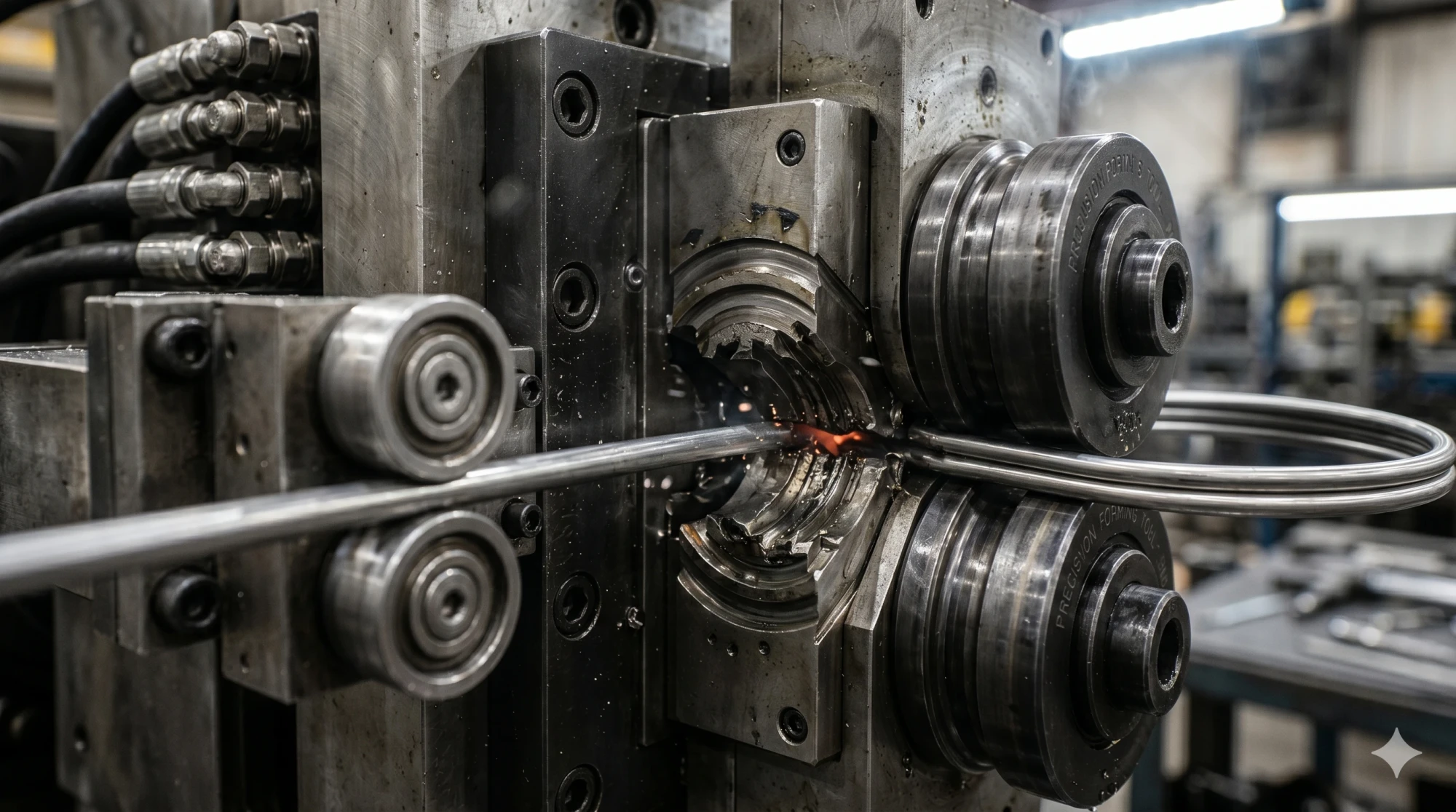
When your stamping dies begin chipping after fewer than 50,000 cycles, the issue rarely lies in the press settings. In our internal production audits, we have identified the root cause as the radial hardness gradient of the raw feedstock. At high speeds, internal stress fluctuations are amplified, directly targeting the weakest points of your tool steel. Proper zipper stamping die maintenance isn’t just about polishing and lubrication; it requires dissecting the mechanics behind these failures and mitigating them through precision feedstock engineering. This shop-floor guide walks through the root causes and practical countermeasures.
For the fundamentals of the wire that feeds your dies, see our Precision Y-Teeth Wire Sourcing & Assembly Guide.
Failure Analysis: The Mechanics of Micro-Fractures in Tool Steel
In our laboratory stamping simulations, we traced the fracture path of precision dies (typically D2 or Tungsten Carbide) to specific material behaviors of the incoming wire:
- Lateral Deflection Models: When wire diameter variance exceeds 0.002mm, the punch encounters asymmetric lateral loads. These forces consistently exceed the fatigue limit of tool steel, initiating micro-fractures at the die edge before catastrophic failure occurs.
- Stress Concentration Migration: Inconsistent material flow caused by uneven wire ductility forces the stress to concentrate on one side of the punch. This dynamic load shifting is the primary enemy of proactive zipper stamping die maintenance, leading to unpredictable downtime.
The Hidden Cost: Feedstock Price vs. Tooling Downtime
Many procurement teams focus solely on the per-kilogram price of the brass or stainless steel wire, ignoring the hidden costs inflicted on the production line. Let’s break down the true cost of subpar feedstock:
- Direct Tooling Costs: Replacing a high-precision carbide punch can cost hundreds of dollars per station.
- Labor Costs: Routine zipper stamping die maintenance takes an experienced technician 2-4 hours per machine.
- Lost Production (OEE): A machine sitting idle for die repair loses tens of thousands of zipper cycles per shift.
By upgrading to ultra-precision wire, the reduction in maintenance frequency alone often offsets the premium material cost within the first 72 hours of continuous operation.
Strategic Countermeasures: The Fullgreat Production Path
To combat these failure modes, we have re-engineered our drawing process to prioritize stamping performance over basic tensile metrics:
1. Stress-Relief Annealing: By utilizing proprietary annealing curves, we disrupt the anisotropy induced by cold work. Test results demonstrate that Fullgreat-grade wire increases the shock-absorption capacity of tool steel by approximately 22% during the stamping cycle.
2. Boundary Lubrication Dynamics: We apply a specialized solid boundary film during the final drawing stage. This layer isolates the die steel from the high-temperature metal flow, significantly inhibiting adhesive wear (galling) on the die surface.
On-Site Diagnostic Checklist: Is Your Wire Killing Your Dies?
Before modifying your press speed or replacing the tool steel again, have your quality team perform these three quick checks on your current wire inventory:
- The Micrometer Spin Test: Measure the wire diameter, then rotate it 90 degrees and measure again. An out-of-roundness greater than 0.003mm guarantees asymmetric die wear.
- The Bend-Recovery Observation: Bend the wire 90 degrees. Does it spring back uniformly across different spool sections? Inconsistent spring-back indicates uneven annealing, leading to jamming.
- Surface Galling Inspection: Check your worn dies under a microscope. If you see micro-welding (material transferred from wire to die), your wire’s surface lubrication is failing under pressure.
Field Case Study: Extending Tooling Life
| Performance Metric | Standard Market Wire | Fullgreat Engineered Wire |
|---|---|---|
| Tool Edge Audit Interval | Every 48 hours | Every 240 hours |
| Punch Rejection Rate | 8.5% | < 1.2% |
Consistent wire quality directly extends die life and protects your tooling investment. For more on how precision wire forming drives production efficiency, see our Y-Teeth vs Standard Metal Zippers guide. For applications requiring non-magnetic stainless wire, review our Non-Magnetic Stainless Steel: The Definitive Guide.
Frequently Asked Questions
Q: Why do my zipper stamping dies chip so quickly?
A: In most cases the culprit is the incoming wire, not the press settings. When wire diameter variance exceeds 0.002mm, the punch sees asymmetric lateral loads that exceed the tool steel’s fatigue limit, causing micro-fractures at the die edge. Inconsistent wire ductility also concentrates stress on one side of the punch. Upgrading to precision wire with tight tolerances is the most effective fix.
Q: How often should zipper stamping dies be maintained?
A: With standard wire, tool edge audits are typically needed every 48 hours and punch rejection rates run around 8.5%. With engineered, high-consistency wire the audit interval can stretch to every 240 hours and rejection drops below 1.2%. The actual frequency depends on your material quality, press speed, and die steel grade.
Q: What is the best way to reduce die wear in zipper stamping?
A: Three actions deliver the biggest impact: (1) source wire with tight dimensional tolerance (+/-0.001mm) and uniform annealing, (2) ensure the wire carries a proper solid boundary lubricant to prevent galling, and (3) run the three-part diagnostic checklist (micrometer spin test, bend-recovery, galling inspection) on every new lot. Together these can cut tooling downtime dramatically.
Q: Does better wire really pay for itself?
A: Yes. A premium carbide punch can cost hundreds of dollars per station, and each repair takes 2-4 technician hours plus lost production. The reduction in maintenance frequency from precision wire often offsets the material premium within the first 72 hours of continuous operation — before considering the avoided OEE losses.
Is your tooling ROI lower than expected? Share your current press tonnage, die steel grade, and wire specs with our team at Bruce@fullgreat.com. We will provide a Production Suitability Diagnostic to identify hidden efficiency bottlenecks.