Blog
Flat Wire Selection Guide: Materials, Dimensions & Ordering

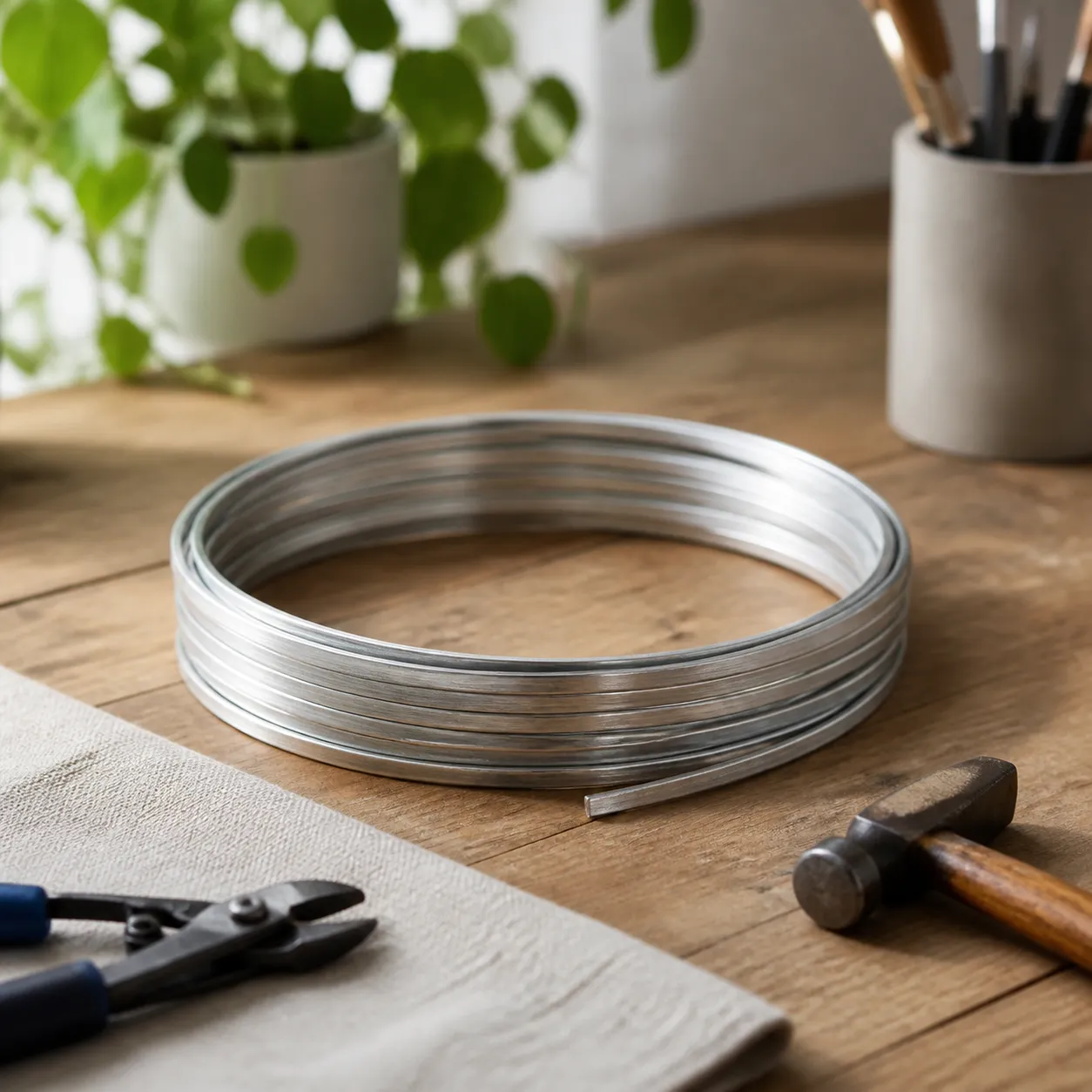
Select flat wire by the job the finished component must perform, then match the material, cross-section and supplied condition. A conductor, a formed bracket and a visible trim component may use a similar rectangular profile, but their material choices can be very different.
A useful starting sequence is:
- Identify the limiting requirement: electrical performance, weight, corrosion exposure, mechanical loading, magnetic response or appearance.
- Choose a material group and section: consider what fits the component and can meet that requirement.
- Check manufacture: select a grade and condition that suit the bends, winding, stamping or joining needed to make the part.
This guide helps you narrow those choices and prepare an enquiry. Fullgreat supplies flat wire in stainless steel, aluminum, copper, iron and composite copper as material for further component manufacture.
How Processing Affects the Wire You Select
Fullgreat produces flat wire by rolling and slitting drawn wire, with edge conditioning for the required profile. Processing establishes the section, but it can also change the material’s strength and forming behavior through cold work.
A section that fits the drawing is only part of the selection. The supplied condition and edges must also suit the operations that follow delivery, such as a tight bend, continuous winding or contact with feeding equipment.
Flat Wire vs Round Wire
Flat wire is specified by width and thickness; round wire is specified by diameter. Choose between them from the component geometry and manufacturing route. A flat section is useful where a defined broad face or rectangular fit is needed, while a round section has the same cross-sectional geometry in every orientation.
| Selection point | Flat wire | Round wire |
|---|---|---|
| Section and fit | Width and thickness can be chosen separately for a rectangular space. | Diameter defines the circular section and its fit. |
| Functional surface | A broad face can suit a design that needs a defined flat contact or visible surface. | A curved surface suits a design based on circular contact or location. |
| Bending orientation | Bending through the thickness and bending edgewise across the width impose different demands. | The circular section avoids a separate wide-face versus edgewise orientation. |
| Electrical comparison | For the same homogeneous material, condition, temperature, length and cross-sectional area, basic direct-current (DC) resistance is the same. Shape alone does not establish a conductivity advantage. | |
| Production checks | Assess orientation, edges and the formed section where they control feeding or fit. | Assess diameter, straightness or winding behavior where they control the process. |
Neither profile is universally stronger or more precise. Compare the actual section and supplied condition against the part’s loading and forming requirements.
Turn Component Requirements into a Wire Specification
Identify What Must Be Controlled Closely
Separate dimensions that control fit or function from those with more flexibility. For example, thickness may control a slot fit while an edge radius affects a bend or an insulation interface. A surface may need a particular finish for contact or joining even when its appearance is unimportant.
For detailed drawing and inspection considerations, see our flat wire cross-section, edge and tolerance guide.
Balance Strength with Further Forming
Grade and supplied condition work together. Cold work can increase strength while reducing the material’s remaining capacity to deform. A softer condition can help with demanding bends, but the finished part still needs adequate resistance to permanent deformation.
Check the Complete Manufacturing Sequence
Assess the material through the operations that matter to the final result. A sample that bends successfully may still need to pass joining, finishing or functional checks. Where a finish or insulation is applied after forming, keep that operation separate from the condition required on delivery.
Choose a Material Group for the Main Requirement
Stainless Steel: Corrosion and Magnetic Requirements
Stainless steel is a candidate where the service environment and mechanical needs favor a corrosion-resistant steel. Grade choice matters: 430 is ferritic and magnetic, while 316 is austenitic and generally has low magnetic response when annealed. Processing can affect the magnetic behavior of austenitic material.
Fullgreat’s listed flat wire options include 430, 316 and proprietary FPD902 for non-magnetic requirements. A corrosion requirement does not replace a magnetic acceptance criterion. Use our stainless steel flat wire guide for grade and condition considerations.
Copper and Composite Copper: Conductivity or a Different Construction
Copper is a starting point when electrical conduction is a primary function. Select the section for the electrical and physical constraints, then the condition and surface for winding, forming or joining. Our copper flat wire selection guide explains conductivity, temper and surface choices.
Composite copper, including Fullgreat’s FPD726 option, uses a different material construction. It may suit a part where the outer surface and core each serve a purpose. Compare the actual electrical, forming and surface requirements before treating a composite as an alternative to copper; a copper-colored surface alone does not establish equivalent performance.
Aluminum: Weight with Alloy-and-Temper Selection
Aluminum is worth considering when reducing component weight matters. Strength and forming requirements then help determine the alloy and condition. For electrical applications, use properties for the selected alloy rather than a general value for aluminum.
Fullgreat’s aluminum flat wire options include 5052 and 5182. Our 5052 vs 5182 aluminum flat wire guide explains their strength-and-forming trade-offs.
Iron-Based Material: Mechanical Requirements and Surface Protection
Fullgreat also lists iron flat wire for mechanical and industrial uses. The material group name alone does not define a strength or hardness level. Choose a specified grade and condition for the load and forming operation, and include the service environment when assessing surface protection.
A requirement for a particular carbon or spring steel grade needs its own material designation. It should not be inferred from a general iron-wire description.
Use the Application to Set Selection Priorities
The following examples show how different functions change the starting point:
- A winding or conductive connection: begin with electrical performance and available space, then assess forming, edges and the connection or insulation process.
- A loaded bracket or formed accessory: begin with the service load and critical bend. Distinguish permanent deformation from excessive elastic bending before changing the material or section.
- A visible trim component: begin with the finished appearance and exposure conditions, then check whether forming and subsequent finishing preserve that result.
- Apparel or zipper-related hardware: establish whether the part needs ordinary flat wire or a dedicated tooth or stop-wire profile. A zipper size alone does not define the raw-material cross-section.
When requirements conflict, compare a small set of candidate specifications against the same part and processing conditions. For example, a condition that improves bending may need a separate check against the finished part’s strength target. Application names help establish context; the functional requirement determines the selection.
Frequently Asked Questions
Can I Choose the Material Before Finalizing the Dimensions?
You can shortlist materials early, but review them with the proposed section before fixing the specification. Reducing thickness changes area, bending behavior and fit; a material change alone may not compensate for all those effects.
Does Custom Flat Wire Mean Complex Shaped Wire?
Custom width, thickness or edges can still describe a flat section. Steps, grooves or projections need a drawing that defines their individual features. Identify that geometry explicitly so a flat-wire enquiry is not mistaken for a different profile.
What Should I Send for an Initial Flat Wire Quotation?
Start with the material if selected, width, thickness and quantity, or send a drawing. Add the critical temper, edge, surface and functional requirements. If material selection is still open, describe the part’s main function and the operation or service condition that limits the choice.
When your requirements are clearer, view our custom flat wire specifications and quotation information for the current product range, supply options and minimum order quantity.