Blog
Extra Hard Stainless Steel Strip for Precision Engineering

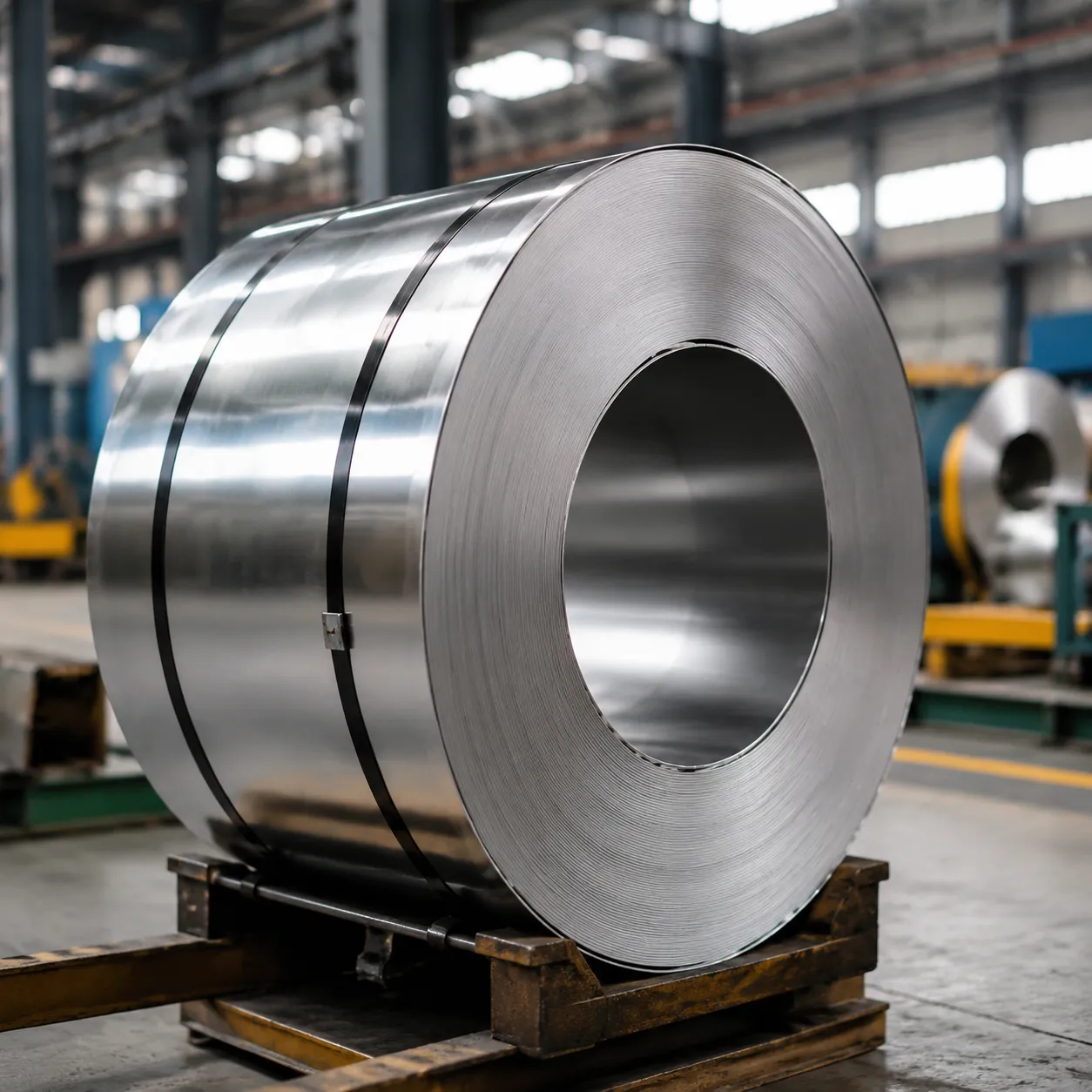
You might already know that standard stainless steel just won’t cut it when your components are under extreme stress. To prevent warping, snapping, or premature failure, you need a material engineered to endure.
That’s where the extra hard stainless steel strip comes in.
Choosing the exact hardness grade for your project can make or break your production yield. Whether you are balancing the structural differences of 301 vs. 304 alloys or trying to master the precise shift between half-hard, full-hard, and spring-hard states, getting it right is a science.
In this quick guide, we’re going to break down the technical properties, cold reduction limits, and high-stress applications of these precision-rolled strips so you can optimize your manufacturing process instantly.
For the fundamentals of non-magnetic grades, see our Non-Magnetic Stainless Steel: The Definitive Guide.
Extra Hard Stainless Steel Strip: Technical Properties and Hardness Grades
The Difference Between Half-Hard, Full-Hard, and Spring-Hard States
Selecting the correct temper depends entirely on the balance between required formability and yield strength. As the material undergoes cold rolling, its hardness climbs through distinct grading states.
| Temper Grade | Hardness Range (HV) | Tensile Strength (MPa) | Primary Characteristics & Workability |
|---|---|---|---|
| Half-Hard (1/2 Hard) | 250 – 310 | 780 – 930 | Moderate flexibility; retains enough ductility for controlled bending and shaping. |
| Full-Hard | 370 – 420 | 1130 – 1320 | High rigidity and minimal elongation; ideal for flat components or minimal bending. |
| Spring-Hard | ≥ 430 | ≥ 1400 | Maximum elasticity and yield strength; excellent fatigue resistance under cyclic stress. |
Our advanced manufacturing process fine-tunes these exact states. A full hard stainless steel strip delivers structural rigidity, whereas a spring hard stainless steel strip provides the necessary elasticity to snap back into shape after deflection, making it the definitive choice for high-stress components.
Why Precision Engineering Requires Custom Hardness Control
In precision engineering, there is no room for a one-size-fits-all approach. When you are manufacturing components that face repetitive stress, standard raw materials fail. Achieving the exact mechanical properties you need requires precise control over the material’s hardness, ensuring it can withstand rigorous stamping, bending, and long-term operational fatigue without cracking. For a deeper look at how cold reduction drives hardness, see our cold rolling reduction ratio guide.
301 vs. 304: Choosing the Right Alloy for Structural Hardness
Choosing the right alloy is the first step in hitting your performance targets. While both are excellent options, they respond differently to work hardening:
- Grade 301: This is the go-to alloy for extreme strength. It has a higher carbon-to-nickel ratio, which accelerates work hardening during cold rolling — reaching spring-hard states at lower reduction ratios than 304. It’s the standard for constant-force springs and precision clips.
- Grade 304: The general-purpose workhorse. It work-hardens more slowly, allowing deeper forming before reaching high hardness. It’s preferred where a balance of formability and final strength is needed.
For a full comparison of spring applications and heat treatment, see our Stainless Spring Steel 301 vs 17-7PH guide.
Achieving Specific Temper Levels: How We Manage Cold Reduction
Reaching an exact temper is a precise science. We control the cold reduction ratio — the percentage of thickness reduction during rolling — to dial in hardness targets. Combined with annealing at intermediate stages, this gives us repeatable control over the final mechanical properties of every coil.
Common Industrial Applications for Extra Hard Stainless Steel Strip
High-Stress Stamping Components and Structural Clips
The spring-hard condition is ideal for high-stress stamping components, structural clips, and flat springs that must hold their shape under repeated load. In electronics, these strips serve as non-magnetic spring contacts where EMI isolation matters. For sourcing these materials, see our Stainless Steel Strip Supplier Guide.
Sourcing Precision Hardened Strips Directly from the Manufacturer
Buying directly from the manufacturer ensures you get the exact hardness temper your design requires. As a direct manufacturer, we provide custom cold reduction, thickness tolerances, and MTC documentation with every shipment. This direct channel guarantees consistent material quality, shorter lead times, and competitive pricing for global manufacturing setups.
Frequently Asked Questions
Q: What is the difference between half-hard, full-hard, and spring-hard stainless steel strip?
A: These are temper states from cold rolling. Half-hard (250-310 HV, 780-930 MPa) retains ductility for bending and shaping. Full-hard (370-420 HV, 1130-1320 MPa) offers high rigidity with minimal elongation, ideal for flat components. Spring-hard (≥430 HV, ≥1400 MPa) provides maximum elasticity and fatigue resistance, snapping back after deflection — the choice for high-stress parts.
Q: Which is better for hardness, 301 or 304 stainless steel strip?
A: 301 work-hardens faster due to its higher carbon-to-nickel ratio, reaching spring-hard states at lower cold reduction ratios — best for extreme strength. 304 work-hardens more slowly, allowing deeper forming before reaching high hardness — best where formability and final strength must be balanced.
Q: How is hardness controlled in stainless steel strip production?
A: Hardness is controlled primarily through the cold reduction ratio — the percentage of thickness reduction during rolling. Higher reduction ratios produce harder tempers. Intermediate annealing resets work hardening, and precise process control dials in the exact final temper required for your application.
Q: Is extra hard stainless steel strip non-magnetic?
A: Austenitic grades like 301 and 304 are non-magnetic in the annealed condition, but heavy cold working can induce strain-induced martensite, creating a magnetic pull at worked areas. For applications requiring stable non-magnetic properties after forming, higher-nickel grades or specialized processing may be needed.
Need precision hardened stainless steel? Send your specifications — alloy, temper, thickness, and width — to Bruce@fullgreat.com for a factory-direct quote with MTC documentation.