Blog
Electrolytic Tinplate SPTE: Temper, Coating & Sourcing Guide

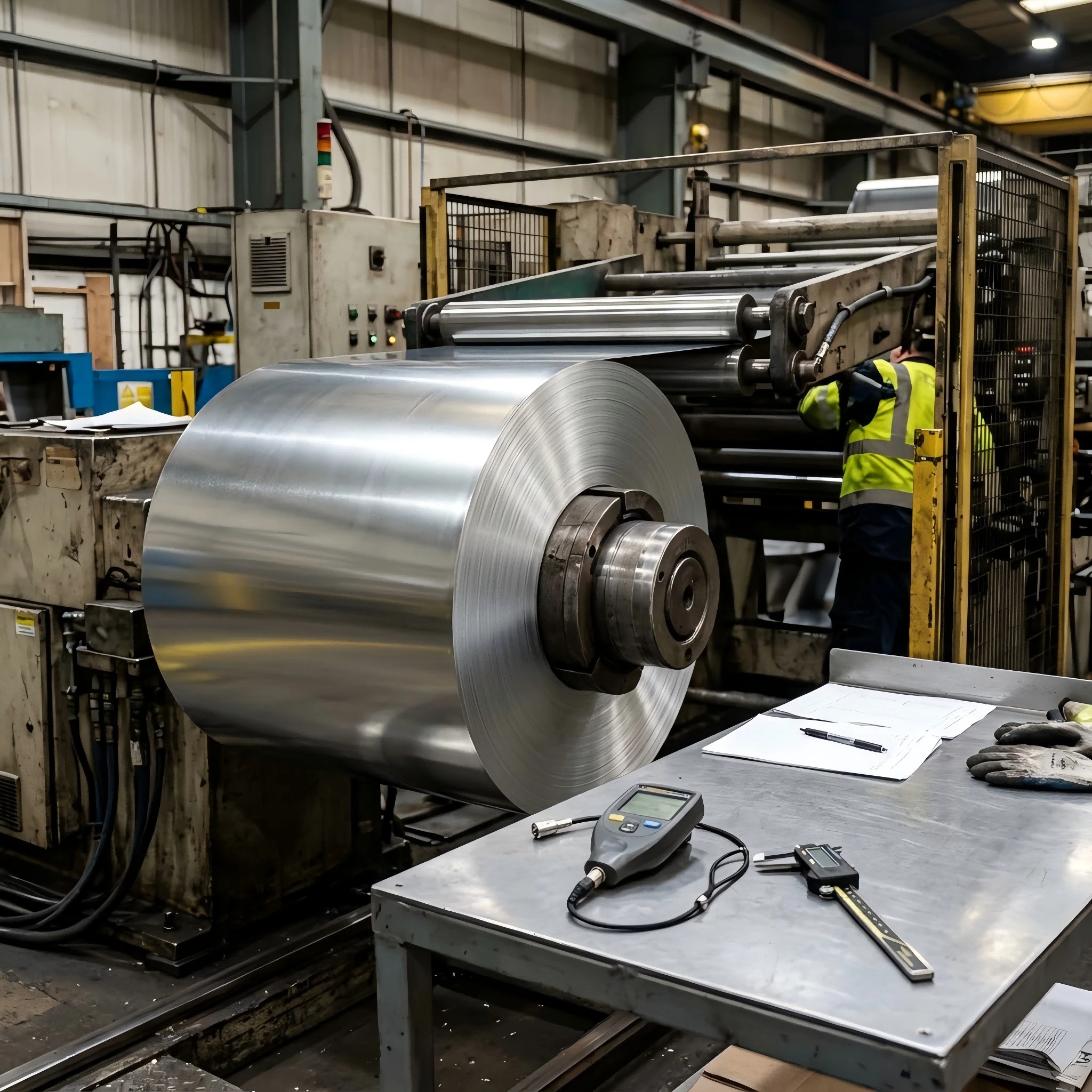
Electrolytic tinplate (SPTE) combines a steel substrate with an electrolytic tin coating. For a can body, closure or stamped component, selecting it means matching the forming route, thickness, temper and coating system. A harder temper or heavier tin coating solves only part of that decision.
This sourcing guide explains single-reduced and double-reduced material, coating mass by side, surface requirements and the checks needed when changing a packaging specification. Detailed supply dimensions remain on the product page.
What Is Electrolytic Tinplate SPTE?
Tinplate is thin cold-rolled steel coated with tin. The steel provides the main mechanical properties; the surface system supports corrosion protection, appearance and joining. Tinplate may also be lacquered or laminated for the intended contents and manufacturing process.
Steel type, temper and coating are separate specification items. MR identifies a general container-steel option with controlled residual constituents. L has particularly low residual constituents for applications needing improved corrosion performance. D is aluminum-killed steel used for demanding drawing and surface-quality requirements.
Those classifications do not establish finished-container suitability by themselves. Contents, internal coating, seams and thermal processing all affect the package. Select them as a system rather than using “food grade” as a complete material description.
SR vs DR Tinplate: Choose Around the Forming Sequence
Single-reduced (SR) and double-reduced (DR) describe manufacturing routes. DR includes additional cold reduction after annealing, increasing strength and changing the remaining forming capacity. It is an option for thinner-gauge designs, not a direct replacement for every SR component.
| Selection issue | SR route | DR route |
|---|---|---|
| Drawing and complex shaping | A suitable softer temper can provide useful forming capacity. | Higher strength changes the forming window; evaluate the critical feature and direction. |
| Body or end deformation resistance | Thickness, temper and component geometry work together. | Strength can support a thinner design, while stiffness and stability still depend on geometry and thickness. |
| Substitution | Keep the approved forming and joining requirements in the comparison. | Assess flange, bead, seam and end performance after the complete production sequence. |
| Standard designation | ASTM A624/A624M addresses single-reduced electrolytic tinplate. | ASTM A626/A626M addresses double-reduced electrolytic tinplate. |
Read Temper Together with Thickness
Fullgreat’s listed HR30T targets include T-1 at 49±3, T-3 at 57±3 and T-5 at 65±3. The product table also lists DR-8 and DR-9. These are hardness references, not tensile-strength values or universal forming limits.
A softer temper may help a demanding draw; a harder one can improve resistance to permanent deformation. Neither choice alone determines the result at a tight flange or scored end. Compare the specified temper and thickness with the geometry and actual production route.
Separate Thickness Savings from Finished-Can Performance
As a geometric example, changing from 0.20 mm to 0.16 mm reduces steel volume by 20% for the same blank area. This does not establish a 20% reduction in total cost or equal buckle resistance. Tooling, forming yield, coating and component performance remain part of the comparison.
When testing a thinner alternative, assess the finished body or end after forming and joining. Include the relevant pressure, handling, sealing and storage requirements rather than accepting the material solely because its hardness is higher.
Tin Coating Mass: Specify Each Surface Clearly
Tin coating mass is normally expressed in g/m² by side. 2.8/2.8 means 2.8 g/m² on each surface, giving a combined nominal mass of 5.6 g/m². It does not mean 2.8 g/m² divided between the two sides.
Differential coating assigns different masses to the two surfaces. With 5.6/2.8, the drawing or order must identify which surface carries each mass. The heavier side is selected around the exposure and coating system; the notation alone does not identify the container interior.
| Order detail | Why it matters | Example |
|---|---|---|
| Mass per side | Distinguishes equal and differential coatings. | 2.8/2.8 or 5.6/2.8 g/m². |
| Side identification | Connects the coating to blank orientation and final exposure. | Identify the contents-facing side and its required coating. |
| Nominal vs acceptance value | Nominal designations and minimum-average test limits are different quantities. | State the designation and acceptance basis together. |
| Coating designation system | A short code needs its governing standard and units. | Use the specified standard rather than treating every commercial code as universal. |
More tin is not a substitute for a suitable lacquer, seam or container design. For coated packaging, assess the surface protection after forming and thermal processing, including features where the coating system may be stretched or damaged.
Finish, Passivation and Oil Are Different Choices
Bright, stone and other surface finishes affect texture and appearance beneath printing or lacquer. They do not by themselves establish adhesion or corrosion performance. Compare the intended finish with the actual printing and coating process.
Passivation and oiling are additional surface-treatment requirements. Specify the required treatment and compatibility with downstream processing separately. A passivation code, oil type or shipping method should be stated in the order rather than assumed from the word “tinplate.”
Match TP or TFS to the Component and Joining Process
Tin-free steel (TFS/ECCS) uses a chromium-based surface instead of tin. It can be useful for lacquered or laminated components, but its surface changes the joining requirements. TP and TFS should be compared as different material-and-process combinations.
Welded Bodies and Formed Cans
A three-piece can uses a separate body and ends; its body seam makes joining a central selection issue. A two-piece body is formed with its bottom and places different demands on drawing, redrawing or ironing. Even within one construction, the selected process determines the useful temper and coating.
For a TFS alternative, assess the joint design and any necessary surface preparation with the joining process. Lower coating cost alone does not establish a lower finished-component cost.
Food, Chemical and Electronic Applications
For packaging, evaluate the contents, internal coating, filling and thermal process, expected storage conditions and intended market requirements. Tinplate selection supports that assessment; it does not independently guarantee a particular shelf life or finished-package compliance.
For an electronic shield or soldered component, consider the surface condition after storage and forming, the soldering process and the joint requirements. A tin-coated surface does not establish flux-free joining or a guaranteed electrical contact result.
Compare Quotations on the Same Delivered Specification
Fullgreat’s listed range includes TP and TFS in coil and sheet form. SR thicknesses are 0.15–0.60 mm and DR thicknesses are 0.14–0.36 mm, with listed widths of 600–1,220 mm. Keep reduction type and dimensions together instead of combining them into one unrestricted range.
The tinplate product specifications provide the detailed temper, coating-mass, surface and size tables. Use those details to build a purchasing requirement, rather than selecting a temper from an application label alone.
A comparable quotation should identify:
- Material: TP or TFS, steel type, SR or DR, temper and governing standard.
- Dimensions: thickness, width, relevant tolerances, sheet length or coil requirements.
- Surface system: coating mass by side, side identification, finish, treatment and intended lacquer or laminate.
- Acceptance: required test results, traceability, documentation and packaging requirements.
- Commercial basis: quantity, destination, delivery basis and requested timing.
For a revised material, make the proposed change explicit: thinner gauge, different temper, coating or material family. This allows price and trial results to be compared against the same finished-component requirements.
Send Fullgreat your tinplate specification and component requirements for a quotation covering the required material, dimensions and surface system.
Frequently Asked Sourcing Questions
Can a heavier tin coating compensate for a forming crack?
A crack is a mechanical or process issue, even when corrosion protection is also important. Review temper, thickness, forming severity, direction and tooling. Increasing tin mass does not restore the steel’s lost continuity.
Does the same HR30T result make two materials interchangeable?
Hardness is one part of the specification. Steel type, reduction route, thickness, directional behavior and surface system can still differ. A substitution should satisfy the forming and finished-component requirements, not only one hardness result.
What should I check when lacquer adhesion changes?
Compare surface finish, treatment, oiling, cleanliness and storage history alongside the lacquer and curing process. Keep the material lot identifiable so the investigation can distinguish a material change from a coating-process change.
Is a material certificate enough to qualify a new can design?
It documents the material information and tests within its stated scope. Qualification of a finished can also involves forming, joints, coatings and the intended use. Include the relevant component and package tests when approving a new design or material change.