Introduction: Brass Strip vs Phosphor Bronze
Why Material Selection Matters
The brass strip vs phosphor bronze decision affects part performance, processing requirements, and sourcing cost. For precision stamped components, material selection should align with the required thickness, width, temper, surface condition, and application environment.
| Selection factor | Why it matters |
|---|---|
| Part function | Determines the required balance of electrical, mechanical, and corrosion performance. |
| Forming process | Influences strip temper, edge quality, and dimensional tolerance requirements. |
| Production control | Supports consistent quality, batch testing, and traceable documentation. |
| Supply requirements | Affects custom slitting, packaging, sample testing, and factory-direct procurement. |
Brass and Phosphor Bronze in Manufacturing
C2680 brass strip is a copper-based strip material used where corrosion resistance, precise specifications, and connector suitability are required. It can be supplied with customized temper, thickness, width, surface finish, film coating, and packaging formats.
Phosphor bronze strip is another copper-alloy strip considered for precision manufacturing applications. When selecting between brass and phosphor bronze, buyers should review the technical drawing and the operating requirements before confirming the material specification.
For controlled production, precision slitting, low-burr edges, verified samples, 100% batch testing, and traceable Mill Test Certificates help support dependable material selection.
What Is Brass Strip?
Chemical composition of C2680 brass
C2680 brass strip is a copper-based brass material supplied for precision applications. We provide custom temper options and precise dimensions to match the drawing, forming method, and end-use requirements. For a closer look at grade-specific use cases, see our C2680 brass strip properties and applications.
Key mechanical properties and characteristics
C2680 brass strip combines corrosion resistance with practical processing flexibility. It can be specified by thickness, width, hardness or temper, surface finish, and protective film coating. Our precision slitting supports controlled strip dimensions and clean edge requirements for demanding production work.
Typical applications of brass strip
We supply brass strip for electrical connectors, precision stamping, automotive hardware, home appliances, and hardware accessories. The material is a practical choice where consistent dimensions, corrosion resistance, and reliable forming performance are important to the finished part.
What Is Phosphor Bronze Strip?
Chemical Composition of C5210 Phosphor Bronze
C5210 phosphor bronze is a copper alloy strip made primarily from copper with tin and phosphorus additions. This copper-tin-phosphorus structure is widely used where a strip must balance strength, elasticity, corrosion resistance, and stable forming performance.
For connector-focused projects, our C5210 phosphor bronze connector strip supports material selection for demanding stamped parts and contact components.
Key Mechanical Properties and Characteristics
Phosphor bronze strip is valued for its dependable spring behavior and resistance to repeated flexing. Compared with many general copper alloy strip options, it is commonly selected when a part needs to retain contact force after forming and repeated use.
Key characteristics include:
- Good elasticity for spring contacts and formed components
- Strong fatigue and wear resistance for moving or mating parts
- Good corrosion resistance in many industrial environments
- Suitable strength and hardness for precision stamping
- Consistent performance for thin, accurately slit strip formats
We can support custom thickness, width, temper, surface finish, film coating, and packaging requirements. Precision slitting and controlled edge quality help reduce burr-related issues during high-speed connector stamping.
Typical Applications of Phosphor Bronze Strip
Phosphor bronze strip is commonly used in components that need mechanical resilience as well as electrical functionality. Typical uses include:
- Electrical connectors and terminals
- Spring contacts and contact clips
- Automotive electrical hardware
- Precision stamped parts
- Switch components and appliance hardware
- Wear-prone metal accessories
For reliable production, we provide material samples for dimensional, hardness, and surface-quality checks, along with batch testing and traceable Mill Test Certificate documentation.
Brass vs Phosphor Bronze: Side-by-Side Comparison
Chemical composition differences: copper-zinc vs copper-tin-phosphorus
Brass and phosphor bronze are copper-based alloys with different alloying systems. C2680 brass is identified for corrosion-resistant strip applications, including electrical connectors. For phosphor bronze grades such as C5210, confirm the exact chemistry from the Mill Test Certificate before production.
| Material | Alloy system | Procurement focus |
|---|---|---|
| C2680 brass strip | Copper-zinc | Temper, corrosion resistance, connector suitability |
| C5210 phosphor bronze strip | Copper-tin-phosphorus | Verify certified chemistry and application requirements |
Mechanical properties: tensile strength, hardness, and elongation
Tensile strength, hardness, and elongation change with temper, thickness, and processing condition. We recommend confirming these values against the approved material specification rather than selecting only by alloy name. Custom hardness and temper options support more accurate material matching.
Electrical conductivity comparison
For electrical parts, conductivity must be reviewed together with forming and contact requirements. C2680 brass strip is used in electrical connector applications. Where the part requires a specific conductivity level, use the approved grade standard and traceable MTC data for final confirmation.
Corrosion resistance in different environments
C2680 brass provides corrosion resistance for applicable strip and connector uses. Actual performance depends on the service environment, surface condition, protective treatment, and contact with other materials. Surface finishing and film coating can be specified where handling or surface protection is required.
Formability and stamping performance
Both materials should be selected according to the stamping shape, bend radius, temper, and edge requirement. Precision slitting helps control width and edge quality for connector stamping and hardware parts. We support custom thickness, width, hardness, surface finish, and film coating to align strip supply with the production process.
Spring performance and fatigue resistance
Spring and repeated-contact requirements need a material review based on the part design and operating load. Confirm the required temper, hardness, and test criteria before selecting brass strip or phosphor bronze strip for spring contact components.
Cost comparison: material and processing
Material cost is only one part of the total sourcing decision. Buyers should compare the selected alloy with slitting accuracy, yield, quality control, packaging, and delivery requirements.
| Comparison factor | Brass strip | Phosphor bronze strip |
|---|---|---|
| Material selection | Suitable where C2680 requirements match the part | Requires grade-specific verification |
| Processing | Custom slitting, finishing, and coating available | Custom specifications should be confirmed |
| Quality control | 100% batch testing and traceable MTC documentation | Confirm applicable test and certificate requirements |
| Supply decision | Match to blueprint, temper, and corrosion needs | Match to mechanical and contact performance needs |
When to Choose Brass Strip
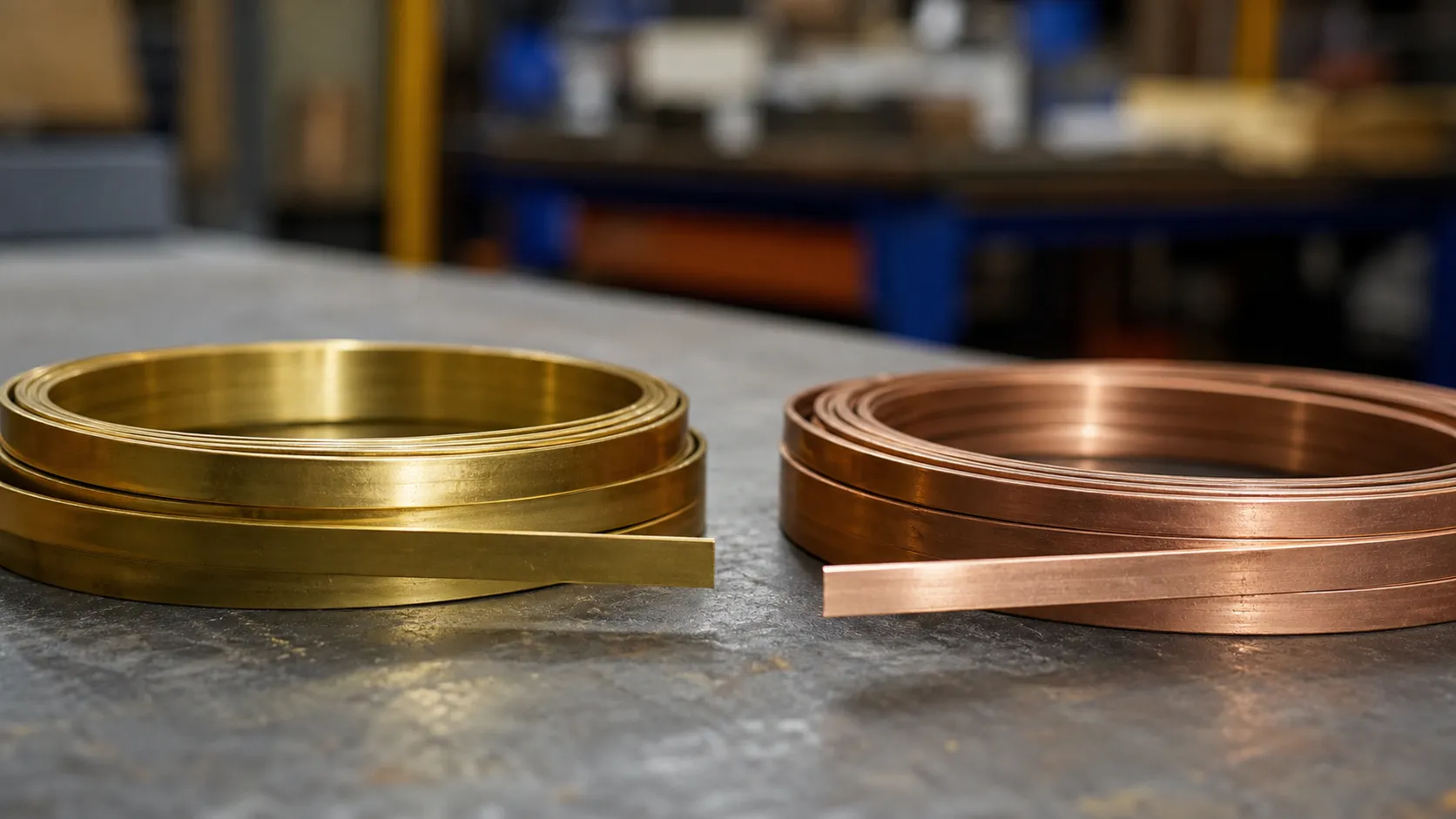
Applications Where Brass Is the Preferred Material
We use C2680 brass strip for precision components that need corrosion resistance, controlled dimensions, and reliable forming. It is suitable for electrical connectors, hardware accessories, automotive-related parts, and home appliance components.
Cost-Sensitive Stamped Hardware
Brass strip is a practical choice for stamped hardware where stable quality and efficient sourcing matter. Our factory-direct supply model supports custom requirements while helping buyers control procurement costs.
| Requirement | Brass Strip Fit |
|---|---|
| Precision stamped parts | Strong choice |
| Electrical connector components | Suitable |
| Custom width and thickness | Available |
| Trial material verification | Samples supported |
Decorative and Aesthetic Requirements
For visible metal components, brass strip can be specified with a suitable surface finish and protective film. We support custom surface treatment requirements to help protect material quality during processing, handling, and delivery.
Moderate Forming With Good Corrosion Resistance
C2680 brass strip offers temper options for parts requiring moderate forming and controlled hardness. Precision slitting can be specified for narrow widths, clean edges, and reduced camber or burr concerns. For projects that also require high-conductivity copper material, see our C1100 copper strip buying guide.
When to Choose Phosphor Bronze Strip
Preferred Applications
In a brass strip vs phosphor bronze material review, phosphor bronze strip may be considered when the part specification calls for resilient copper-alloy performance. We recommend confirming the required grade, temper, dimensions, and test criteria against the finished-part drawing before production.
| Application need | Material-selection focus |
|---|---|
| Precision connector parts | Contact force, dimensional control, and surface requirements |
| Stamped hardware | Forming method, edge condition, and repeatability |
| Automotive and appliance parts | Application conditions and traceable quality records |
| Hardware accessories | Fit, finish, and required service performance |
High-Elasticity Contacts
For connector and contact components, selection should start with the required elastic behavior and electrical function. Specify thickness, width, hardness or temper, surface finish, and burr-control requirements clearly. Precision slitting and controlled cross-section tolerances support accurate stamping and consistent part fit.
Repeated Mating Cycles
Parts that open, close, or engage repeatedly require a material review based on the actual mating design and operating conditions. Confirm the contact geometry, forming process, required service life, and inspection standard before choosing between brass strip and phosphor bronze strip. Testing samples can help verify dimensions, hardness, and surface quality before a larger order.
High-Wear Environments
For components exposed to friction or repeated contact, define the wear environment in the technical drawing and procurement specification. Review edge quality, surface condition, coating needs, and packaging protection alongside the base material. We provide custom slitting, surface finishing, film coating, and traceable Mill Test Certificates to support controlled copper-alloy strip sourcing.
Brass vs Phosphor Bronze: Decision-Making Guide
We select between brass strip and phosphor bronze by starting with the part’s real working conditions. The right copper alloy strip must suit the drawing, forming process, surface requirement, and supply plan, not only the initial material cost.
Step 1: Part Function and Performance
Define what the part must do in service. For C2680 brass strip, confirm the required temper, corrosion resistance, dimensional accuracy, and suitability for the intended electrical connector or hardware use. For phosphor bronze, confirm its specified grade and required performance from the applicable material standard or supplier documentation.
| Part requirement | Material-selection focus |
|---|---|
| Electrical connector or stamped hardware | Conductivity, temper, contact design, and dimensional consistency |
| Formed metal component | Bend profile, hardness, and edge condition |
| Precision part | Thickness, width, and cross-section tolerance |
| Corrosion-exposed component | Environment, surface finish, and protective treatment |
Step 2: Forming and Stamping Method
Review blanking, bending, drawing, and repeatability before selecting the strip. Precision slitting, burr control, and stable coil quality help reduce avoidable stamping issues. Tooling condition also affects material use and finished-part consistency; this guide to minimizing zipper stamping die wear outlines practical factors that matter in stamped metal production.
Confirm the required thickness, width, temper, and edge condition before production. Our custom slitting and leveling services support precision dimensions, including tightly controlled cross-sections for wire and strip applications.
Step 3: Electrical and Mechanical Needs
Balance electrical needs against mechanical demands. C2680 brass strip is used for electrical connector applications and can be supplied with custom temper options. When comparing brass strip vs phosphor bronze, base the decision on verified material data for the selected grade, along with the required hardness, formability, and service performance of the finished part.
Step 4: Environment and Corrosion Exposure
Assess humidity, handling, contact conditions, and the expected exposure environment. Brass strip offers corrosion resistance, while surface finish and film coating can be specified to suit handling and downstream processing. Confirm the final material selection against the actual operating environment and applicable customer specification.
Step 5: Cost and Supply Availability
Compare total procurement value, including material specification, processing, testing, packaging, and delivery timing. Factory-direct supply can reduce intermediary cost, while stocked materials and production capacity support responsive order planning. Standard items may support small trial orders for quality testing; custom requirements depend on setup needs.
For both brass strip and phosphor bronze sourcing, verify these essentials before approval:
- Dimensions: thickness, width, and tolerance
- Temper: hardness and forming requirement
- Surface: finish and optional film coating
- Edges: slitting quality and burr control
- Documentation: 100% batch testing and traceable Mill Test Certificates
- Packaging: coil, spool, and shipment format
A disciplined brass strip vs phosphor bronze review keeps the material aligned with the blueprint, production method, and required quality documentation.
Key Specifications to Confirm for Both Materials
For a reliable brass strip vs phosphor bronze comparison, confirm the purchasing specification before production. The alloy name alone does not define the finished strip.
Thickness, Width, and Tolerance Requirements
Confirm the required thickness, slit width, and allowable dimensional variation from the part drawing. We support precision slitting and control wire and strip cross-sections to tight tolerances, including up to ±0.01 mm where the specification requires it.
Temper and Hardness Options
Specify the required temper or hardness based on the forming process and final part function. C2680 brass strip is available with custom temper options; the selected condition should match the approved material standard and application requirements.
Edge Quality and Burr Control
Define the edge condition for stamping and forming. Precision slit strip should be ordered with controlled edges, including camber-free and low-burr requirements where needed, to reduce handling issues and material waste.
Surface Finish and Protective Film
State the required surface condition, including finish and film coating when protection during processing or transport is needed. Surface quality should be verified against the approved sample or drawing.
Coil Format and Packaging
Confirm coil dimensions, winding direction, spool or packaging format, and protection requirements. Custom packaging helps keep copper alloy strip stable through shipment and production handling.
Mill Test Certificate and Traceability
Require a traceable Mill Test Certificate (MTC) with each shipment. We apply 100% batch testing and provide documentation to support material verification under ISO 9001 and ISO/TS16949 quality controls.
| Specification | What to Confirm |
|---|---|
| Dimensions | Thickness, width, tolerance, and camber requirement |
| Material condition | Alloy designation, temper, and hardness |
| Edge condition | Burr limit and precision slit edge requirement |
| Surface | Finish, cleanliness, and protective film |
| Delivery format | Coil size, packaging, and handling protection |
| Documentation | MTC, batch identification, and traceability |
Why Source Brass Strip vs Phosphor Bronze from Fullgreat Metal
Copper Alloy Supply
Fullgreat Metal supplies C2680 brass strip alongside C11000/T2 pure copper strip for buyers who need a direct-source partner for precision metal materials. For a brass strip vs phosphor bronze sourcing decision, we review the drawing, application requirements, and required material characteristics before confirming a suitable supply route. Our custom metal parts capabilities also support projects that require material selection to align with part requirements.
Precision Slitting and Dimensions
We provide custom slitting for brass strip, including precision and ultra-narrow formats. Thickness, width, temper, surface finish, film coating, and packaging can be specified to suit the application. Our controlled wire and strip cross-sections can reach tolerances within ±0.01 mm, with attention to camber and burr control to help reduce material waste in downstream processing.
Quality Management
Our production operates under ISO 9001 certification and applies the ISO/TS16949 automotive quality management system throughout manufacturing. More than 100 sets of processing and testing equipment support 100% batch testing, helping us verify dimensions, hardness, and surface quality before shipment.
Factory-Direct Traceability
Factory-direct supply helps reduce intermediary costs while keeping material specifications clear from inquiry through delivery. We maintain approximately 10,000 tons of standing inventory and provide traceable Mill Test Certificates with shipments. Samples are available for dimensional, hardness, and surface-quality verification, supporting practical evaluation of brass strip requirements before production supply.
Conclusion: Selecting the Right Material for Your Application
Summary Comparison Table
A brass strip vs phosphor bronze decision should begin with the drawing, operating conditions, and required performance. We support C2680 brass strip with custom specifications and technical material recommendations based on the application.
| Selection Factor | C2680 Brass Strip | Phosphor Bronze Strip |
|---|---|---|
| Material basis | Copper-zinc alloy | Confirm the required grade and material data before ordering |
| Suitable focus | Electrical connectors, stamped hardware, and corrosion-resistant parts | Select according to the required mechanical and contact performance |
| Customization | Thickness, width, temper, surface finish, film coating, and packaging | Confirm available dimensions, temper, finish, and coil requirements |
| Quality control | 100% batch testing with traceable MTC documentation | Confirm inspection and traceability requirements for the specified grade |
| Procurement approach | Factory-direct supply and custom slitting | Review the exact material specification before quotation |
Next Steps: Application Review, Samples, and Quotation
We review drawings and application requirements to recommend the appropriate copper alloy strip specification. Confirm the required thickness, width, hardness, surface condition, edge quality, coil format, and testing requirements before production.
Samples are available for dimension, hardness, and surface-quality verification. For C2680 brass strip and other precision metal materials, we provide factory-direct quotations, custom processing, 100% batch testing, and traceable Mill Test Certificates with shipment.