Blog
5 mm Thick Stainless Steel Strip Guide and Factory Supply

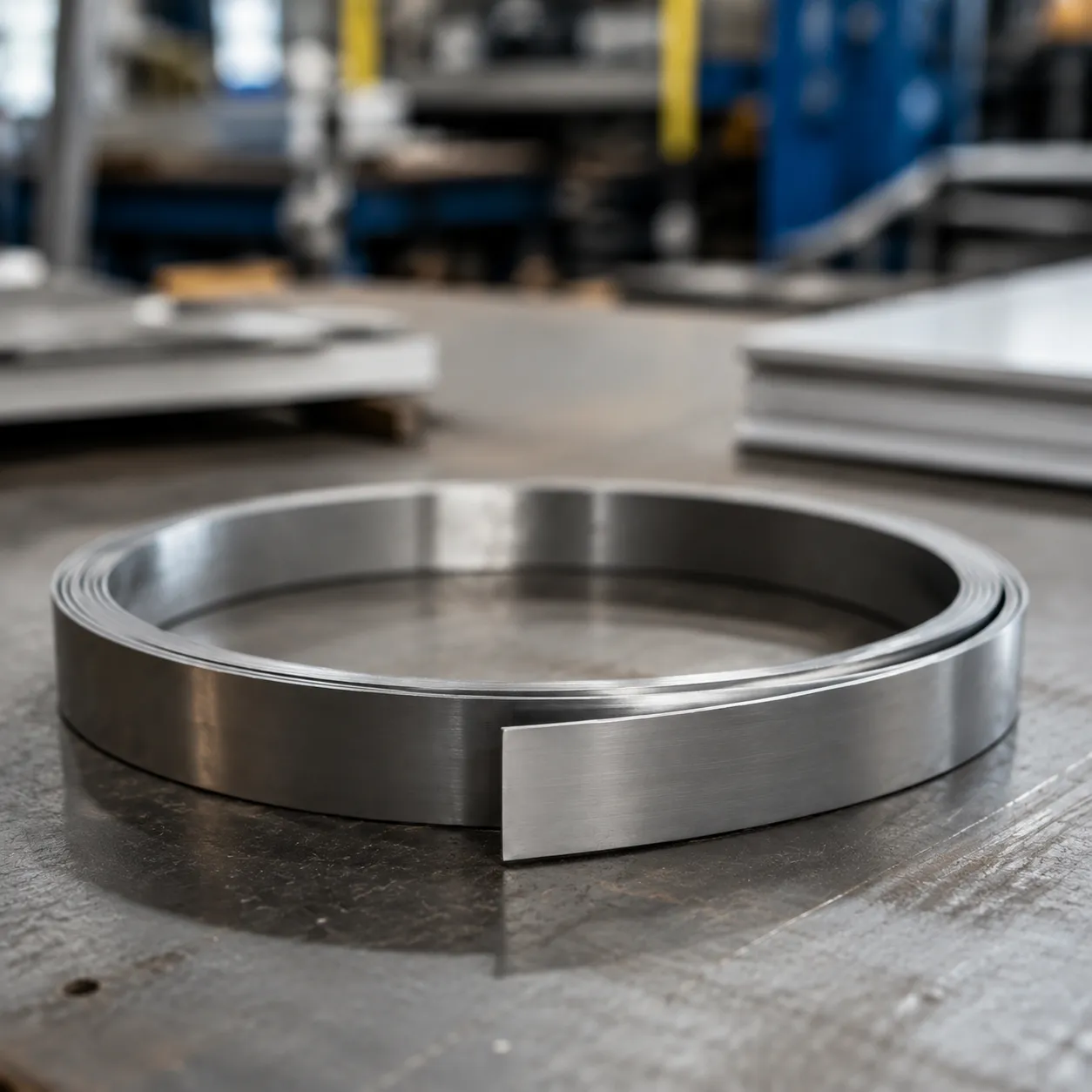
In heavy industrial manufacturing, material thickness dictates structural integrity. A 5 mm thick stainless steel strip represents the upper echelon of heavy-gauge coil processing. Unlike standard thin-gauge foils, a 5 mm thickness profile bridges the gap between traditional sheet plate and high-speed coil processing, offering the continuous feed benefits of a strip alongside the rugged durability of structural steel plate.
For global industrial buyers, sourcing this specific gauge requires a deep understanding of material behavior, thickness tolerances, and structural capabilities. Delivering reliable performance under extreme stress, these heavy-gauge strips are engineered for demanding engineering environments where structural failure is not an option.
For the fundamentals of stainless steel grades, see our Non-Magnetic Stainless Steel: The Definitive Guide.
Hot-Rolled vs. Cold-Rolled Heavy Gauge Stainless Strips
When dealing with a 5 mm thick stainless steel strip, the manufacturing methodology fundamentally shapes the mechanical properties and surface finish of the final product.
| Characteristic | Hot-Rolled (HR) Heavy Gauge | Cold-Rolled (CR) Heavy Gauge |
|---|---|---|
| Production Process | Rolled at elevated temperatures (above recrystallization) | Cold-reduced after hot rolling to achieve exact dimensions |
| Surface Finish | Matte, slightly rough, with a protective oxide scale | Smooth, bright, and highly reflective surface finish |
| Thickness Tolerance | Standard commercial tolerance; slight variations acceptable | Ultra-strict tolerance control for precision engineering |
| Mechanical Properties | Lower internal stress, excellent ductility, and formability | Higher tensile strength and hardness due to strain hardening |
| Primary Use Case | Structural frameworks, heavy-duty stamping, welding | Precision components, visible architectural trim, deep drawing |
- Hot-Rolled Heavy Gauge Strips: The optimal choice for applications where structural strength and cost-efficiency outweigh surface cosmetics. The hot-rolling process allows for easier shaping of the thick steel coil, making it perfect for subsequent heavy-duty stamping and structural welding.
- Cold-Rolled Heavy Gauge Strips: For sectors requiring tight thickness tolerance and superior flatness control, cold-rolled 5 mm strips are mandatory. Although more intensive to produce at this thickness, cold rolling yields a premium product with enhanced yield strength and a pristine surface finish ready for immediate manufacturing.
Key Industrial Applications for 5 mm Stainless Steel Strips
When applications demand serious structural integrity, a 5 mm thick stainless steel strip is the go-to choice. This heavy gauge material bridges the gap between standard sheet metal and heavy plate, offering the perfect blend of formability and extreme load-bearing strength. Industries rely on these thick steel strips to handle high-stress environments where failure is not an option.
Heavy-Duty Automotive Brackets and Structural Reinforcements
In the automotive sector, safety and durability rule. The heavy gauge stainless steel strip is a critical raw material for manufacturing components that must absorb impact and resist corrosion over a long lifespan.
- Chassis Reinforcements: Provides the rigid backbone needed for commercial vehicles and heavy trucks.
- Heavy-Duty Stamping: Ideal for deep-draw stamping of robust mounting brackets, suspension parts, and bumper supports.
- Exhaust System Mounts: Withstands both high mechanical vibration and extreme thermal cycling without warping.
Construction Hardware and Machinery Components
For the building and industrial machinery sectors, we supply these heavy gauge strips to guarantee long-term stability under harsh conditions. Thick steel coils are slit to precise widths to create components that keep infrastructure moving.
- Structural Connectors: Used for heavy-duty framing anchors, masonry ties, and joist hangers that require strict thickness tolerance and high yield strength.
- Machinery Wear Strips: Acts as a durable, corrosion-resistant guide rail or slide plate in industrial conveyor systems.
- Heavy Hardware: Perfect for manufacturing industrial hinges, latches, and brackets used in marine or chemical processing environments.
If you are looking to integrate these heavy-duty materials into your production line, understanding how to cut stainless steel strip efficiently is essential for maintaining tight tolerances and clean edges on thick profiles.
Manufacturing and Processing Challenges for Thick Strips
Leveling and Straightening for Superior Flatness Control
Processing 5 mm heavy gauge strips demands precision leveling and straightening to control flatness. Heavy coils retain internal stress from rolling; a multi-roll leveler flattens the strip so it feeds cleanly through stamping dies and fabrication equipment, preventing camber and edge wave that plague thick material.
High-Force Slitting and Custom Edge Conditioning
Slitting 5 mm stainless requires high-force machinery with high-carbon, high-chromium tool steel blades to handle the material’s work-hardening tendency. Custom edge conditioning (deburring or rounding) removes stress concentrators that cause edge cracking during subsequent forming. For the complete processing breakdown, see our How to Cut Stainless Steel Strip guide.
Sourcing a 5 mm Thick Stainless Steel Strip Directly from the Factory
Sourcing 5 mm stainless steel strip directly from the factory matters for thick steel coil because quality control and thickness tolerance are far more critical at heavy gauges. As a direct manufacturer, we provide tight dimensional tolerances, custom slit widths, and MTC documentation with every shipment. For bulk sourcing across all product forms, browse our extensive inventory of stainless steel coil strip plate options to ensure you get the exact grade and thickness your project demands.
Frequently Asked Questions
Q: What is a 5 mm stainless steel strip used for?
A: It’s used for heavy-duty automotive brackets and structural reinforcements (chassis reinforcements, deep-draw mounting brackets, exhaust mounts), construction hardware (framing anchors, masonry ties, joist hangers), and machinery components (wear strips, guide rails, heavy hinges). It bridges the gap between sheet metal and plate, combining strip feed efficiency with plate-like strength.
Q: What is the difference between hot-rolled and cold-rolled 5mm stainless strip?
A: Hot-rolled heavy gauge has a matte finish with standard tolerance — best for structural strength, heavy-duty stamping, and welding where cosmetics don’t matter. Cold-rolled has a smooth, bright finish with ultra-strict tolerance and higher strength from strain hardening — mandatory for precision components, visible architectural trim, and deep drawing.
Q: Can 5 mm stainless steel strip be slit to custom widths?
A: Yes, but it requires high-force slitting machinery with high-carbon, high-chromium tool steel blades to handle the material’s work-hardening tendency. Custom edge conditioning (deburring or rounding) removes stress concentrators that cause edge cracking during forming. Specify your width, edge condition, and tolerance to your supplier.
Q: How is flatness controlled on thick stainless steel strips?
A: Heavy coils retain internal stress from rolling. A multi-roll leveler flattens the strip before slitting or use, controlling flatness and preventing camber and edge wave. This ensures the strip feeds cleanly through stamping dies and fabrication equipment — critical at 5mm gauges where distortion is more pronounced.
Need reliable 5 mm thick stainless steel strips? Send your specifications — grade, thickness, width, and quantity — to Bruce@fullgreat.com for a factory-direct quote with MTC documentation.